Cordless
Cordless Vacuums vs Robot Vacuums: Which Is Better in 2026?

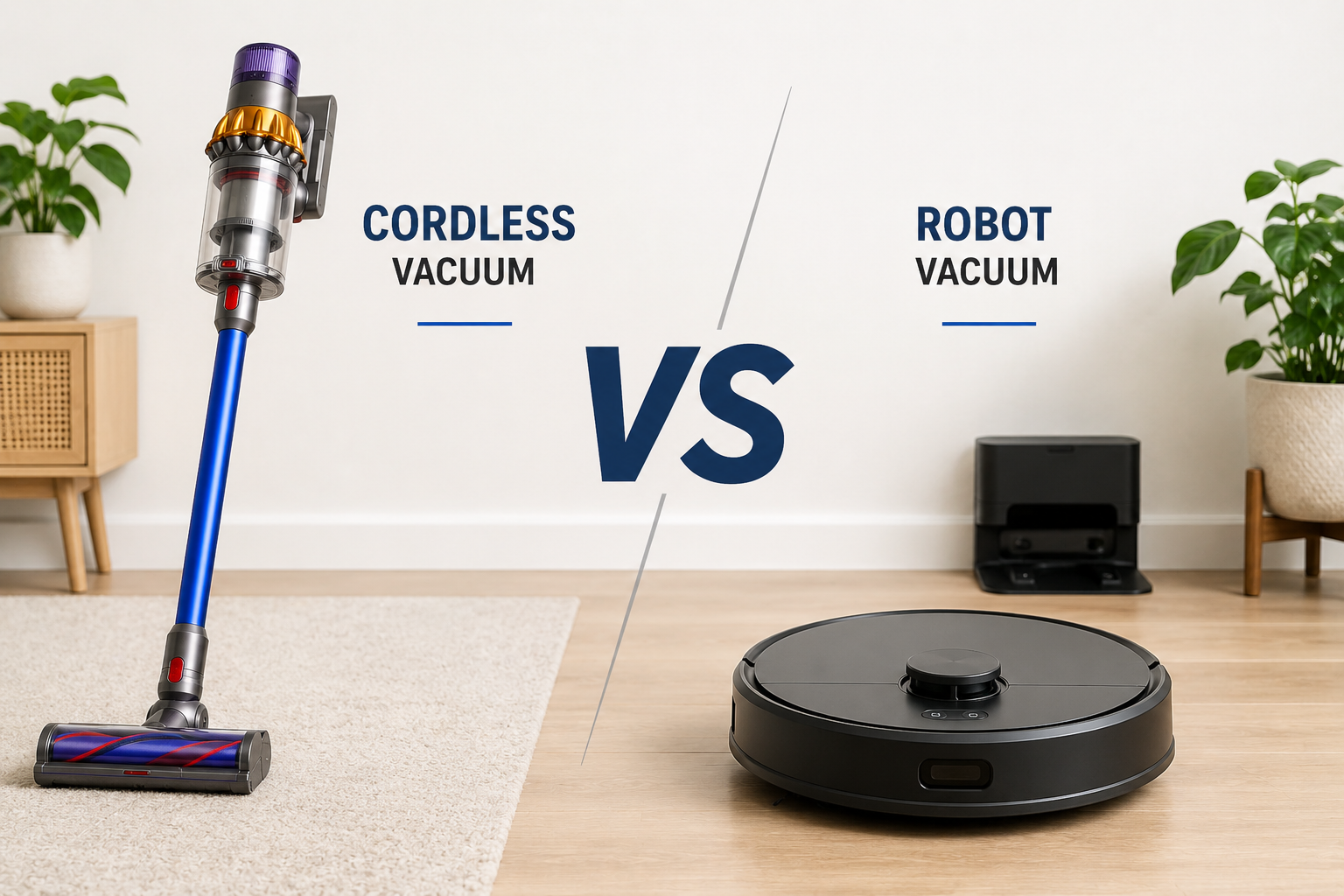
Cordless vacuums and robot vacuums solve two very different cleaning problems.
A cordless vacuum gives you direct control. You grab it, clean exactly where you want, and put it away. A robot vacuum trades some of that control for automation. It cleans on a schedule, works while you are doing something else, and can help keep floors consistently cleaner between deeper cleaning sessions.
Neither is automatically better.
If you want stronger hands-on cleaning, stairs, upholstery, cars, or targeted mess pickup, cordless usually wins. If you want daily floor maintenance with as little effort as possible, a robot vacuum can be incredibly useful.
The better choice depends on whether you value control or automation more.
Disclosure: Some links on this page are affiliate links. We may earn a commission if you make a purchase, at no extra cost to you. As an Amazon Associate I earn from qualifying purchases.
Quick Picks
Choose a cordless vacuum if you want: stronger targeted cleaning, better carpet performance, stairs, furniture cleaning, car cleaning, fast spot cleaning, and complete control over where the vacuum goes.
Choose a robot vacuum if you want: scheduled cleaning, automatic floor maintenance, less hands-on vacuuming, smart-home features, or a machine that can clean while you are away.
Cordless vacuums shoppers are buying heavily right now.
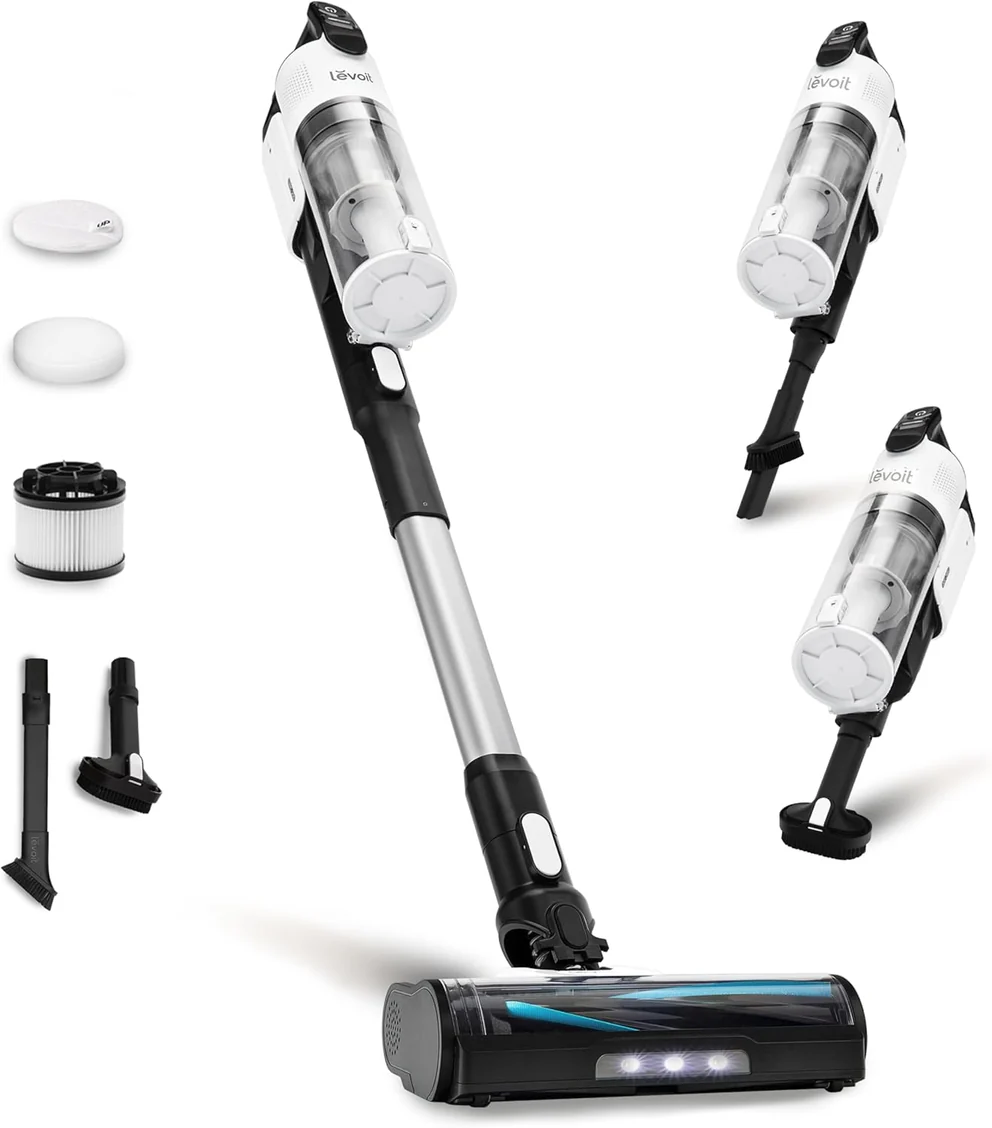
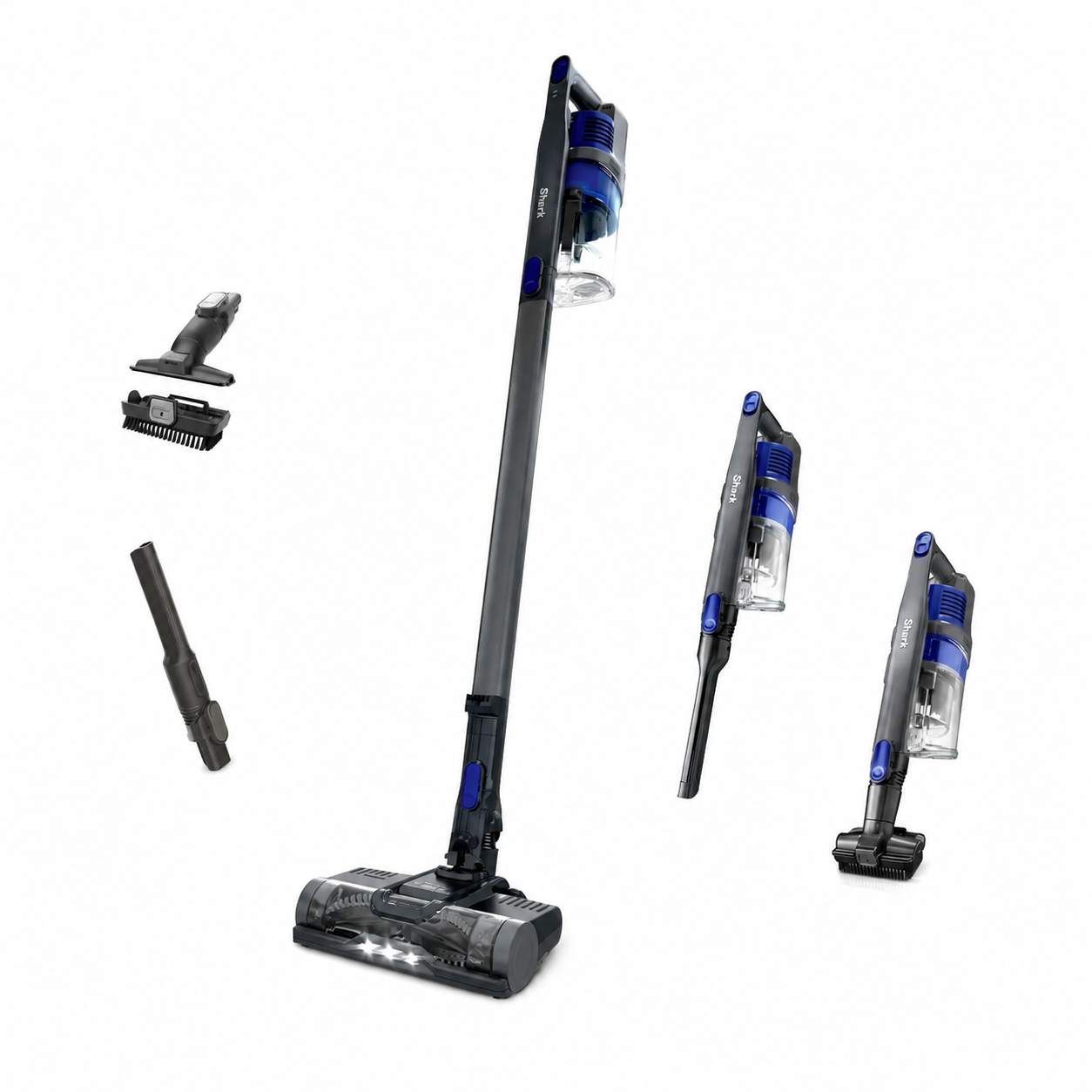
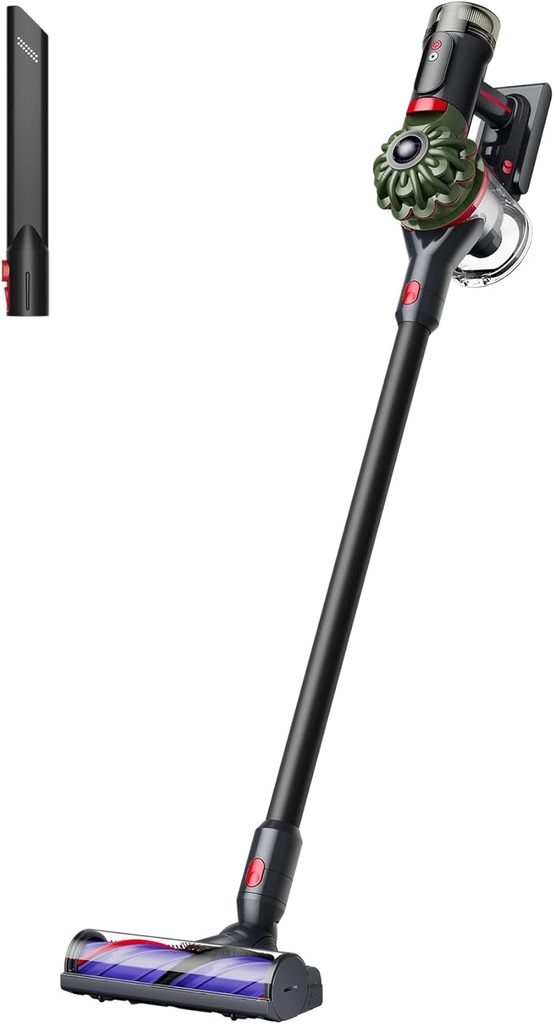
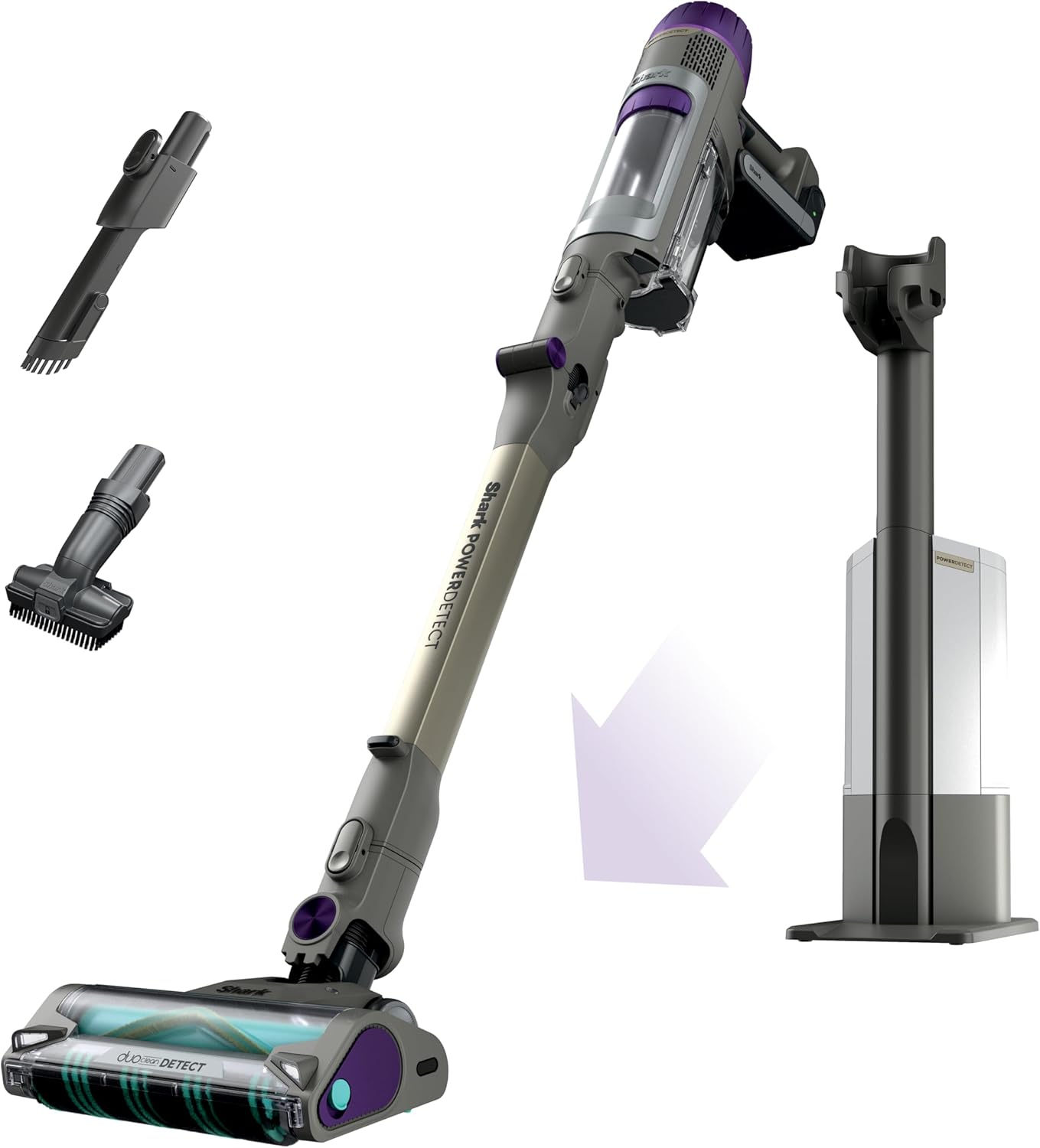
Based on current Amazon sales signals. Updated October 2026.
For most households choosing only one vacuum, we would generally choose a cordless vacuum because it can clean more places and handle more types of messes.
For households that already have a primary vacuum and want to reduce daily floor maintenance, a robot vacuum can be an excellent second machine.
Cordless vs Robot Vacuum Comparison
| Feature | Cordless Vacuum | Robot Vacuum |
|---|---|---|
| Quick spot cleaning | Excellent | Poor |
| Automatic cleaning | No | Excellent |
| Carpet cleaning | Good to excellent | Fair to good |
| Hard floors | Excellent | Excellent |
| Stairs | Excellent | Cannot clean stairs |
| Furniture | Excellent | Floors only |
| Cars | Excellent | Cannot clean cars |
| Pet hair | Good to excellent | Good for daily maintenance |
| Edge cleaning | Controlled manually | Varies by model |
| Deep cleaning | Better | Limited |
| Daily maintenance | Good | Excellent |
| Hands-on effort | Moderate | Low |
| Navigation | You control it | Automated |
| Storage | Compact | Dock + floor space |
| Maintenance | Filters, brush roll, battery | Brushes, sensors, bin, dock, filters |
Cleaning Performance
A cordless vacuum has the advantage when you want to actually attack a mess.
You can make several passes over a dirty area, increase suction, switch attachments, move furniture, clean corners, and concentrate on carpet or pet hair until the job is finished.
A robot vacuum works differently.
Its strength is repeated cleaning. Instead of waiting until the floor is obviously dirty, a robot can run several times each week—or even daily—and remove debris before it builds up.
That can make a home feel consistently cleaner, especially on hard floors.
But when something spills, the dog tracks dirt inside, or a rug needs serious attention, grabbing a cordless vacuum is usually faster and more effective.
Hard Floors
This is one of the strongest categories for robot vacuums.
Hard floors are relatively easy for robots to navigate, and regular scheduled cleaning can prevent dust, crumbs, pet hair, and everyday debris from accumulating.
Many modern robot vacuums also include mopping systems, although mopping performance varies widely between models.
Cordless vacuums are also excellent on hard floors. The difference is how they clean.
A robot vacuum is better for automatic maintenance.
A cordless vacuum is better for immediate and targeted cleaning.
For homes where hard flooring is the priority, see our guide to the best cordless vacuums for hardwood floors.
Carpet
Cordless vacuums generally have the advantage on carpet.
A good cordless vacuum uses a powered brush roll and lets you deliberately work over carpeted areas, edges, rugs, and high-traffic zones.
Robot vacuums can maintain low- and medium-pile carpet surprisingly well, especially when they run frequently. Higher-end models can also detect carpet and automatically increase suction.
But carpet presents more challenges for robots than hard floors. Thick rugs, deep fibers, thresholds, fringe, and objects on the floor can all interfere with cleaning.
A robot is useful for keeping carpet tidy.
A cordless vacuum is still the better choice when carpet needs more deliberate cleaning.
For stronger carpet options, see our best cordless vacuums for carpet and rugs.
Stairs
There is no real contest here.
A robot vacuum cannot clean a staircase.
Modern robots use cliff sensors to prevent themselves from driving down stairs, which is important for safety but also means each floor of a multi-story home becomes a separate cleaning area.
A cordless vacuum can be carried upstairs and used directly on the steps, edges, landings, and rail-side areas.
Many cordless models also convert into handheld vacuums, making stair cleaning considerably easier.
If stairs are a major part of your home, see our best cordless vacuums for stairs.
Furniture, Upholstery, and Cars
Cordless wins this category completely.
Robot vacuums clean floors.
A cordless stick vacuum can usually convert into a handheld and clean:
- Sofas
- Chairs
- Mattresses
- Pet beds
- Shelves
- Baseboards
- Cars
- Stairs
- Tight corners
That versatility is one of the biggest reasons we would generally choose a cordless vacuum if you only want to own one machine.
A robot vacuum is more specialized.
It is excellent at maintaining accessible floors, but it cannot replace the above-floor cleaning ability of a cordless vacuum.
Automation
This is where robot vacuums dominate.
You can schedule many robot vacuums to clean automatically while you are working, sleeping, or away from home.
Higher-end models may also offer:
- Room mapping
- No-go zones
- Selective room cleaning
- Automatic recharging
- Automatic dirt emptying
- Mop washing
- Mop drying
- Obstacle avoidance
- Carpet detection
- Smart-home integration
A cordless vacuum does none of that.
It sits there until someone picks it up.
If reducing the amount of time you personally spend vacuuming is the goal, automation can be more valuable than raw cleaning power.
Quick Cleanups
Cordless vacuums are much better for sudden messes.
Someone drops cereal.
The dog tracks dirt through the door.
There are crumbs around the kitchen island.
You notice pet hair on the couch five minutes before company arrives.
With a cordless vacuum, you grab it and clean the problem immediately.
Sending a robot vacuum to deal with one small mess is often slower than simply cleaning it yourself.
For this type of use, see our best cordless vacuums for quick cleanups.
Pet Hair
Both types can work well for pet owners, but they serve different roles.
A robot vacuum can be especially useful in homes with shedding pets because it can run frequently and collect hair before it accumulates around walls, furniture, and open floor areas.
That daily maintenance can make a noticeable difference.
A cordless vacuum is better when pet hair needs to be removed from:
- Carpet
- Upholstery
- Pet beds
- Stairs
- Cars
- Corners
- Furniture
The strongest setup for a heavy-shedding household may actually be both: let the robot handle routine floor maintenance and use the cordless for targeted cleaning.
Navigation and Obstacles
You are the navigation system with a cordless vacuum.
That sounds obvious, but it is a major advantage.
You can see cords, socks, pet toys, furniture legs, thresholds, and other obstacles and simply work around them.
Robot vacuums depend on sensors, cameras, LiDAR, or other navigation systems.
The better models can map rooms and avoid many obstacles, but performance varies. Some robots still require you to pick up cords, toys, or small items before a cleaning run.
A cluttered home can reduce the convenience advantage of a robot if you have to prepare the floor every time it runs.
Large Homes
Both vacuum types can work in large homes, but in different ways.
A cordless vacuum may require a long-lasting battery or removable batteries if you want to clean the entire home at once.
A robot vacuum does not have the same problem because it can return to its dock, recharge, and continue cleaning on supported models.
The tradeoff is time.
You can manually vacuum a room quickly with a cordless.
A robot may take much longer to cover an entire floor, but you do not have to stand there while it works.
For large homes where cordless runtime matters, see our best cordless vacuums for large homes.
Multi-Level Homes
This is another important difference.
A cordless vacuum naturally moves between floors because you carry it.
A robot vacuum generally stays on one level unless you physically move it.
Some robots can save multiple floor maps, but the robot still cannot climb stairs on its own.
If you want automated cleaning on multiple levels, you may eventually want more than one robot vacuum.
That makes robot ownership considerably more expensive in a multi-story home.
Battery Life
Both use rechargeable batteries, but battery limitations affect them differently.
A cordless vacuum requires you to stop cleaning when the battery is depleted unless the model has a removable battery.
A robot vacuum can usually return to its charging dock automatically.
Many models can then resume the cleaning job after charging.
So while a robot may technically have limited runtime, the limitation is less noticeable because the entire system is designed around autonomous recharging.
For cordless shoppers concerned about runtime, see our best cordless vacuums with removable batteries.
Maintenance
Robot vacuums are automatic cleaners, but they are not maintenance-free.
You may need to:
- Remove hair from brushes
- Clean sensors
- Empty the dustbin
- Replace filters
- Clean wheels
- Remove tangled debris
- Maintain the docking station
- Refill clean water on mop models
- Empty dirty water
- Replace mop pads
Self-emptying and self-cleaning docks can reduce the workload, but they also add more parts to maintain.
Cordless vacuums are mechanically simpler.
You generally empty the bin, wash or replace filters, clean the brush roll, and maintain the battery.
If low maintenance is your priority, do not assume the word “robot” means zero work.
Cost
Robot vacuums can range from relatively inexpensive basic models to premium systems costing considerably more than many cordless vacuums.
The biggest price jump often comes from automation features such as:
- Self-emptying docks
- Mop washing
- Mop drying
- Advanced obstacle detection
- Better navigation
- Automatic detergent systems
- More advanced mapping
Cordless vacuums also cover a wide price range, but a strong mid-range cordless can often provide more cleaning versatility per dollar because it cleans floors, stairs, upholstery, cars, and other surfaces.
If budget matters, our best cordless vacuums under $300 guide is a good place to start.
Storage
A cordless vacuum generally uses very little floor space.
Many hang on a wall mount or sit on a compact charging base.
A basic robot vacuum is also compact, but the docking station occupies permanent floor space.
Advanced self-emptying and self-washing docks can be much larger.
That is worth considering in apartments and smaller homes where every square foot matters.
For compact-home options, see our best cordless vacuums for apartments.
Can a Robot Vacuum Replace a Cordless Vacuum?
For most households, not completely.
A robot vacuum can dramatically reduce how often you need to manually vacuum open floors, especially on hard surfaces.
But it cannot clean stairs, furniture, cars, mattresses, shelves, or many tight areas.
It also cannot respond to a sudden mess as quickly as someone grabbing a cordless vacuum.
A robot vacuum is best viewed as a floor-maintenance specialist.
A cordless vacuum is a general-purpose cleaning tool.
Can a Cordless Vacuum Replace a Robot Vacuum?
Absolutely.
A cordless vacuum can perform nearly every floor-cleaning task a robot can perform—and many jobs a robot cannot.
The difference is that you have to do the work yourself.
If you do not mind manually vacuuming, there is no need to own a robot.
The value of a robot comes from reducing repetitive cleaning, not from doing something impossible with a conventional vacuum.
Is Owning Both Worth It?
For the right household, yes.
This combination makes a lot of sense:
Robot vacuum: automatic daily floor maintenance.
Cordless vacuum: stairs, furniture, corners, cars, carpet touch-ups, pet beds, and sudden messes.
Instead of choosing between automation and versatility, you get both.
The question is whether the extra convenience justifies owning and maintaining two machines.
For busy households, pet owners, or homes that accumulate visible floor debris quickly, it may.
Which One Should You Buy?
Buy a cordless vacuum if:
- You only want to own one vacuum.
- You have stairs.
- You clean furniture or cars.
- You want stronger targeted cleaning.
- You have substantial carpet.
- You frequently clean sudden messes.
- You want a more versatile machine.
- You do not mind vacuuming manually.
Buy a robot vacuum if:
- You already own another vacuum.
- You want floors cleaned automatically.
- You have mostly hard floors.
- You have pets that shed frequently.
- Your floor plan is relatively open.
- You want scheduled cleaning.
- Reducing hands-on cleaning time matters most.
The Bottom Line
If you are choosing one vacuum, we recommend starting with a cordless vacuum.
It can clean floors, stairs, furniture, cars, corners, upholstery, and sudden messes. A robot simply cannot match that versatility.
If you already own a good primary vacuum and want to spend less time maintaining your floors, a robot vacuum becomes much more compelling.
The best way to think about the choice is simple:
Cordless replaces manual cleaning equipment.
Robot reduces manual cleaning time.
And for households that can justify both, the two types complement each other extremely well.
Frequently Asked Questions
Are robot vacuums as powerful as cordless vacuums?
Generally, no. A good cordless vacuum gives you stronger targeted cleaning and allows repeated passes over dirty areas. Robot vacuums are better at maintaining floors through frequent automated cleaning.
Are robot vacuums good on carpet?
Yes, many modern robot vacuums can maintain low- and medium-pile carpet effectively. Thick carpet, deep debris, rug fringe, and high-pile surfaces can still be more challenging.
Are robot vacuums better for hardwood floors?
Robot vacuums work particularly well on hard floors because the flat surface is easier to navigate and allows regular scheduled cleaning. Cordless vacuums remain better for immediate or concentrated cleaning.
Can robot vacuums clean stairs?
No. Robot vacuums use cliff-detection systems designed to prevent them from falling down stairs. The stairs themselves still need to be cleaned manually.
Is a robot vacuum worth it if I already have a cordless vacuum?
It can be. A robot can reduce how often you need to manually vacuum open floors, while the cordless handles stairs, furniture, cars, corners, and deeper cleaning.
Which is better for pet hair?
A robot vacuum can be excellent for collecting pet hair from floors every day. A cordless vacuum is more versatile because it can also remove pet hair from upholstery, stairs, pet beds, cars, and other surfaces.



4 Best New Roborock Vacuums of 2026

4 Best New Tineco Vacuums of 2026

4 Best New BISSELL Vacuums of 2026

4 Best New Shark Vacuums of 2026

4 Best New Dyson Vacuums of 2026

New ECOVACS Vacuums for 2026

6 Best Cordless Vacuums With Strong Suction in 2026

6 Best Cordless Vacuums With Removable Batteries in 2026

6 Best Cordless Vacuums With Docking Stations in 2026

6 Best Cordless Vacuums for Allergies in 2026

6 Best Upright Vacuums With Height Adjustment in 2026
