Disclosure: Some links on this page are affiliate links. We may earn a commission if you make a purchase, at no extra cost to you. As an Amazon Associate I earn from qualifying purchases.
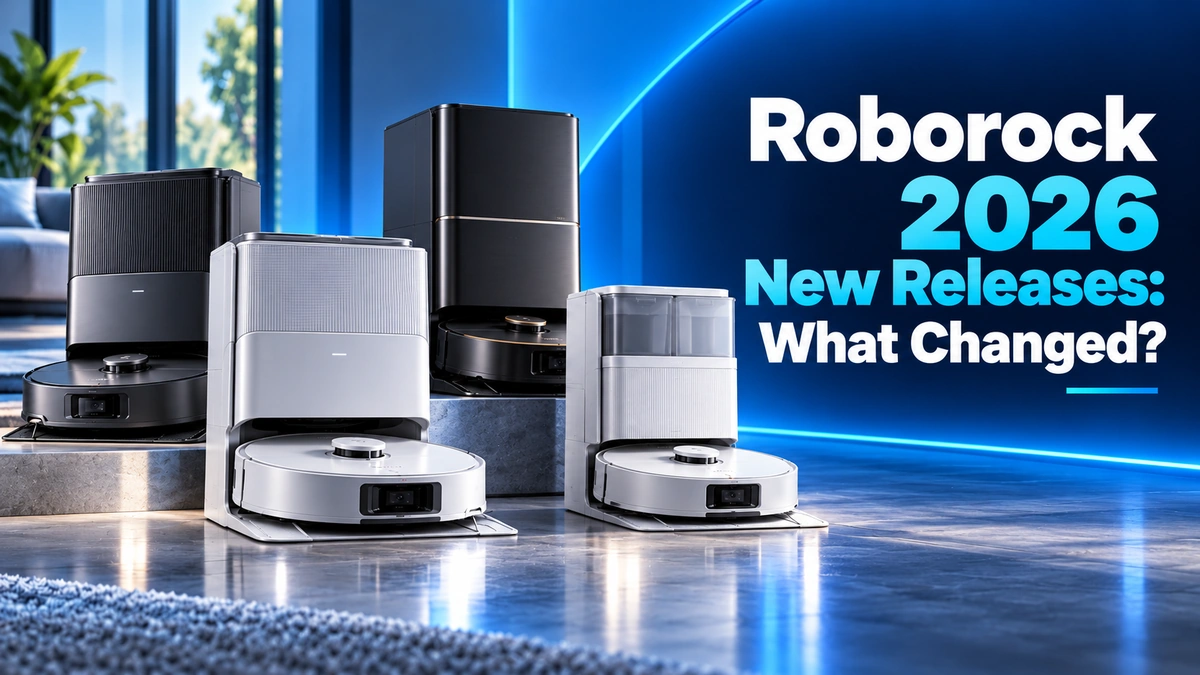
Roborock’s 2026 lineup is less about one headline robot and more about a platform shift. The company is pushing harder on three problems that premium robot vacuums still struggle with: moving through real homes, adapting the mopping system to the mess, and reducing the amount of maintenance left for the owner.
That shows up most clearly in the Saros 20 family. Roborock is now offering multiple versions built around different mopping philosophies rather than treating one mop design as the answer for every home. At the same time, the company is increasing published suction, improving low-clearance access, expanding anti-tangle hardware, and making the dock a more active part of cleaning.
The result is a lineup that asks buyers to choose by floor-care style instead of simply buying the highest-numbered model.
2026 Roborock Lineup at a Glance
| Feature | Roborock Saros 20 | Saros 20 Flow | Saros 20 Sonic | Qrevo Curv 2 Pro |
|---|---|---|---|---|
| Published suction | 36,000 Pa | 36,000 Pa | 36,000 Pa | 25,000 Pa |
| Mop approach | 200 RPM dual-spinning mops | SpiraFlow 2.0 self-cleaning roller | VibraRise 5.0 vibrating mop | Dual-spinning mop platform |
| Mobility focus | AdaptiLift Chassis 3.0 | AdaptiLift Traverse 3.0 | AdaptiLift Chassis 3.0 | Enhanced AdaptiLift |
| Availability context | Current U.S. product | Current U.S. product | Current U.S. product | Global-market configuration; regional availability can differ |
Saros 20 Is the New All-Around Flagship Direction
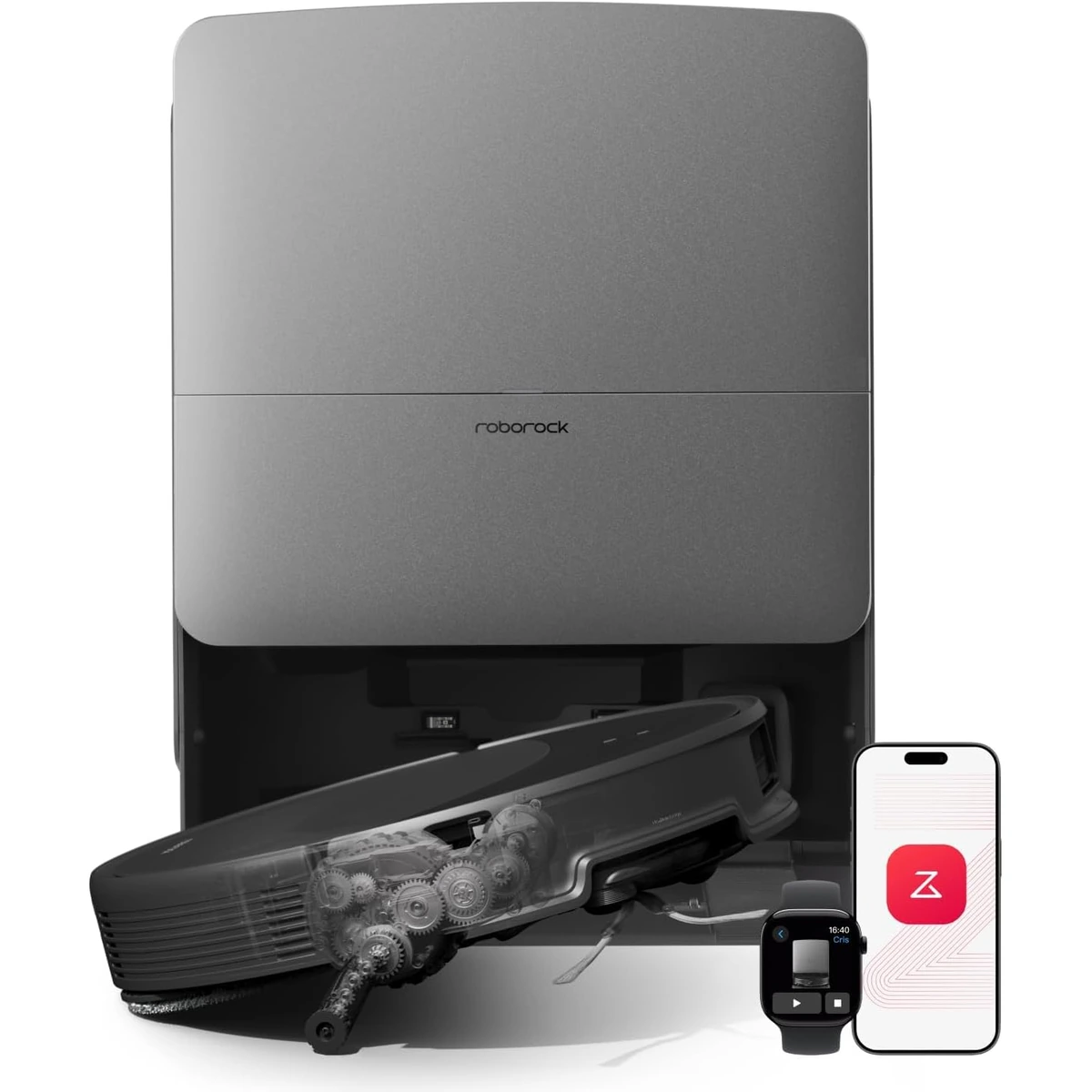
The standard Saros 20 is the clearest expression of Roborock’s new flagship direction. Roborock lists a 36,000 Pa HyperForce digital motor, StarSight Autonomous System 2.0, a dual anti-tangle system, and AdaptiLift Chassis 3.0. The chassis is designed to help the robot cross taller thresholds and deal with mixed floor heights more gracefully.
That mobility focus matters. Robot vacuums have become much better at mapping rooms, but physical transitions can still stop an otherwise capable machine. Roborock says the Saros 20 can handle a double-layer threshold totaling up to 8.8 cm under its stated test conditions. That is a much more ambitious target than the basic door thresholds many older robots were designed around.
The navigation system also reflects a shift away from relying on one raised LiDAR turret for everything. Readers comparing clutter-handling systems can also see our best robot vacuums with obstacle avoidance guide. StarSight combines more advanced sensing with low-profile packaging, helping the robot see obstacles while still fitting under more furniture. For buyers, that means the upgrade is not just “more suction.” It is a robot designed to reach more of the home without getting stranded as often.
Saros 20 Flow Turns Roller Mopping Into Its Own Platform
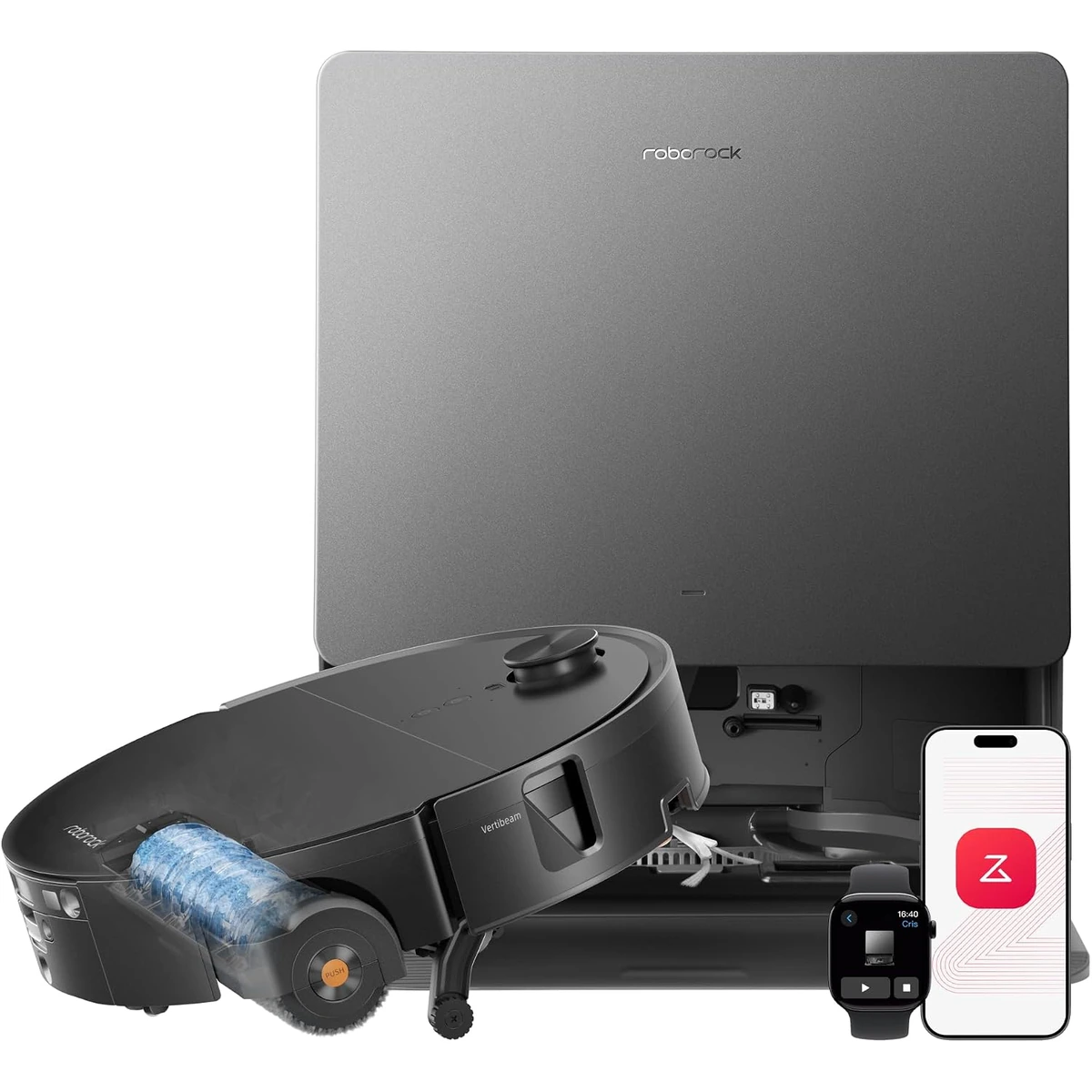
The Saros 20 Flow changes the cleaning approach more dramatically. Instead of the vibrating pad system found on other Roborock models, it uses the SpiraFlow 2.0 pressurized self-cleaning system. Roborock describes it as a warm-water floor-washing approach that refreshes the roller while the robot works.
That makes the Flow version especially interesting for sealed hard-floor homes. A roller system can continuously present a cleaner surface to the floor instead of dragging the same pad over an entire room. Roborock pairs that with the same 36,000 Pa suction rating and strong threshold capability, so the robot is not being positioned as a mop-first machine that gives up vacuuming performance.
The practical question is whether your home benefits from a dedicated roller-mop design. Our best robot vacuums with mop combo guide offers a broader comparison of wet-cleaning approaches. Kitchens, dining rooms, pet zones, and large hard-floor areas are where this style makes the strongest case. Carpet-heavy homes may care more about the standard Saros 20 or the Sonic model instead.
Saros 20 Sonic Keeps Roborock’s Vibrating-Mop Identity Alive
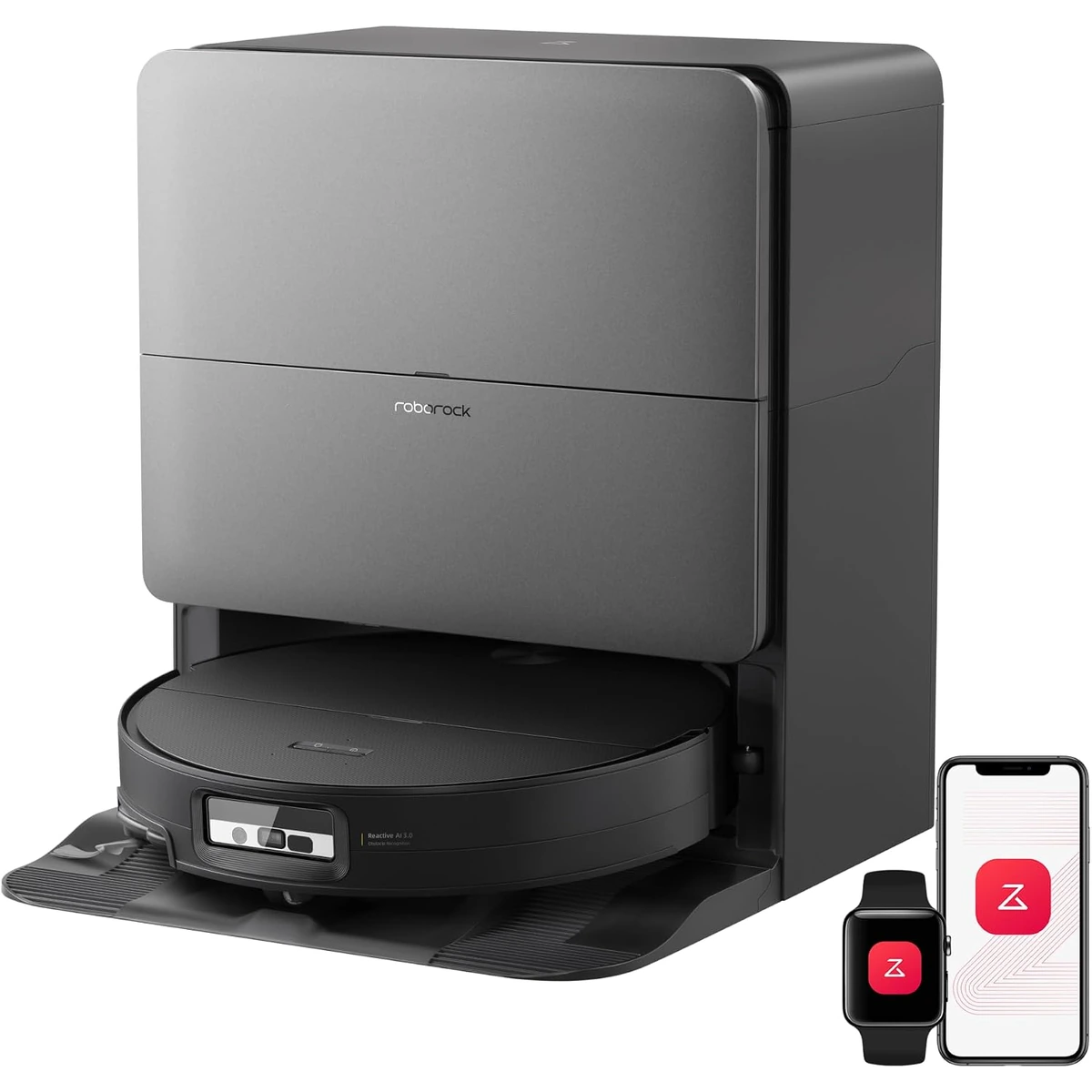
The Saros 20 Sonic takes a different route. It uses VibraRise 5.0, Roborock’s newer vibrating mopping system, with published downward pressure and high-frequency sonic scrubbing. The mop can extend toward edges, and the system is designed to lift when carpet protection is needed.
That matters because Roborock is no longer forcing buyers into one premium mopping architecture. Flow is about continuously refreshed roller cleaning. Sonic is about high-frequency scrubbing with a vibrating pad. The standard Saros 20 uses 200 RPM dual-spinning mops, giving it a third premium approach alongside Flow’s self-cleaning roller and Sonic’s vibrating pad.
For shoppers, that is a useful change. If you already like Roborock’s VibraRise behavior and want a newer version with stronger suction, more advanced mobility, and a lower profile, the Sonic model is the natural continuation. If you want a fundamentally different hard-floor cleaning mechanism, Flow is the more meaningful upgrade.
Qrevo Curv 2 Pro Brings Premium Chassis Tech Below Saros
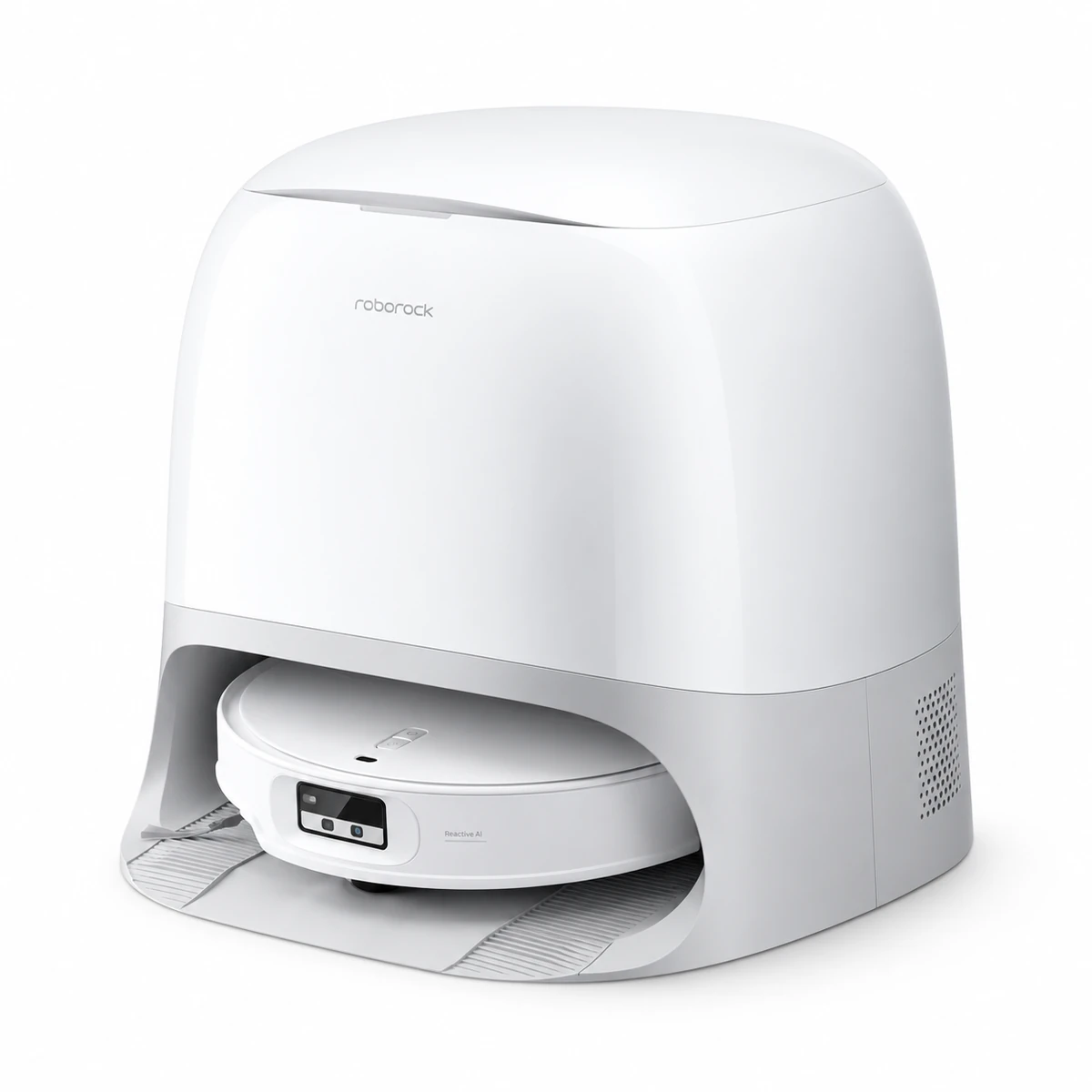
The Qrevo Curv 2 Pro shows that Roborock’s newer ideas are not staying exclusive to the Saros name. It is a global-market configuration, and exact U.S. availability can differ from Roborock’s international lineup. Roborock lists 25,000 Pa HyperForce suction, an enhanced AdaptiLift chassis, dual anti-tangle hardware, automatic mop detachment, and a 7.98 cm ultra-slim design.
That combination is important because Qrevo has traditionally been the easier route into Roborock’s full-service dock ecosystem. The Curv 2 Pro now borrows more of the mobility and carpet-care concepts that once would have felt like flagship-only features.
Automatic mop detachment is particularly practical in carpet-heavy homes. Instead of only lifting a wet mop above the carpet, the system can leave the mop behind for certain vacuuming tasks. That gives buyers another way to manage the hard-floor-versus-carpet compromise that comes with combination robots.
The Biggest Change Is How Roborock Handles the Home Itself
Across the 2026 lineup, Roborock appears to be treating the house as an obstacle course rather than a flat map. Taller thresholds, low furniture, carpet transitions, edge geometry, and tangled hair are all getting dedicated hardware.
That is a meaningful evolution. Mapping accuracy matters, but perfect maps do not help if the robot cannot cross a rail, fit under a sofa, or recover from a thick rug. AdaptiLift and lower-profile navigation hardware are therefore more important than they may look on a specification sheet.
The same applies to anti-tangle systems. Homes with pets or long hair can turn brush maintenance into a weekly chore. Roborock’s dual anti-tangle approach is designed to reduce that burden on both the main and side brushes rather than treating hair wrap as an accessory problem.
The Dock Is Becoming a Cleaning Appliance of Its Own
Roborock’s newer docks continue the industry-wide move toward active maintenance. Hot-water mop washing, automatic drying, water handling, detergent support, and automated dust emptying are increasingly part of the premium experience.
The 2026 change is that these dock functions are being paired with more specialized robots. A roller-mop model needs different care than a vibrating-pad model. A robot that detaches its mop needs the dock to store and manage that hardware intelligently. The dock is no longer just a bin and charger; it is part of the cleaning architecture.
That also means buyers should think about dock size, plumbing options, consumables, and maintenance access before buying. More automation can save time, but it also creates a larger system that needs a permanent place in the home.
Should You Upgrade to a 2026 Roborock?
An upgrade makes the most sense when one of the new systems solves a specific frustration. Choose the Saros 20 if threshold crossing, low-clearance access, obstacle recognition, and strong all-around cleaning are the priority. Choose Saros 20 Flow if sealed hard floors and continuously refreshed roller mopping matter most. Choose Saros 20 Sonic if you prefer Roborock’s vibrating-mop approach but want the newest mobility and suction platform.
The Qrevo Curv 2 Pro is more compelling when you want newer chassis and carpet-care features without automatically stepping into the Saros tier.
If your current Roborock already navigates your thresholds, reaches under your furniture, keeps hair off the brushes, and maintains your floors without frequent intervention, the 2026 lineup does not create an automatic reason to replace it. The meaningful upgrades are mobility, specialized mopping, and reduced maintenance—not the model year printed on the box.
What Matters Most When Comparing the 2026 Models
Suction is the easiest specification to compare, but it should not be the only one. The Saros 20 family shares a very high published suction rating, yet the cleaning experience can differ substantially because Flow and Sonic use different mopping systems. A home with mostly tile or sealed wood may care more about the way the mop refreshes itself than about the last few thousand pascals of suction.
Threshold height and furniture clearance are similarly practical. If your current robot already reaches every room, AdaptiLift may be less important. If a sliding-door rail or tall transition blocks part of the floor plan, the chassis technology can be one of the most valuable upgrades in the entire machine.
Finally, consider the dock. The robot may be the exciting part, but the dock determines how often you empty debris, wash components, refill water, and clean the maintenance tray. The right 2026 Roborock is the one that reduces the chores you actually dislike.
The Bottom Line
Roborock’s 2026 releases show a company moving from “smart robot vacuum” toward adaptive floor-care systems. The Saros 20 family gives buyers multiple mopping strategies on a shared premium platform. AdaptiLift makes physical mobility a core feature. Lower-profile navigation helps the robots reach more of the floor. Anti-tangle hardware and increasingly capable docks reduce the chores surrounding the cleaning job.
For buyers, the best new Roborock is therefore not necessarily the most expensive one. It is the model whose mopping system, mobility hardware, and dock automation match the way your home actually creates messes.
Frequently Asked Questions
Is Saros 20 Flow automatically better than Saros 20 Sonic?
No. Flow uses a continuously refreshed roller-mop approach, while Sonic uses Roborock’s newer vibrating mop platform. The better choice depends on your floors and the kind of wet cleaning you need.
Does 36,000 Pa mean every Saros 20 model will clean carpet identically?
No. Published suction is only one part of real-world pickup. Brush design, carpet behavior, navigation, airflow, and software also affect results.
Who should care most about AdaptiLift?
Homes with taller thresholds, rails, thick transitions, or carpet changes that stop a conventional robot. If your current robot already travels everywhere without trouble, the benefit is smaller.
Should an older Roborock owner upgrade only for a newer dock?
Usually not. A dock upgrade makes the most sense when it removes a repeated maintenance problem, such as mop washing, drying, water handling, or debris disposal.