
Disclosure: Some links on this page are affiliate links. We may earn a commission if you make a purchase, at no extra cost to you. As an Amazon Associate I earn from qualifying purchases.
Quick Comparison
| Feature | Dyson V16 Piston Animal (SV53) | Dyson V15 Detect (SV22) |
|---|---|---|
| Maximum published suction | 315 AW | 240 AW |
| Maximum manufacturer runtime | Up to 70 minutes | Up to 60 minutes |
| Charge time | About 3.5 hours | About 4.5 hours |
| Main floor-head approach | All Floor Cones Sense with dual conical anti-tangle brush bars | Digital Motorbar plus Fluffy Optic cleaner head |
| Bin | CleanCompaktor compressing bin; 0.35 gal listed capacity | 0.77 L standard bin |
| Filtration | 99.99% to 0.1 microns on the standard V16 listing | 99.99% to 0.3 microns on the V15 listing |
| Weight | 7.5 lb | 6.83 lb |
| Best fit | Buyers who want Dyson’s newest power, anti-tangle head and compressed-bin convenience | Buyers who want proven high-end cleaning with lower weight and a mature accessory platform |
Shop the vacuums compared here
Each link leads to the named model. Prices, retailer availability, and included accessories may change; check the exact configuration before purchasing.
The Short Answer
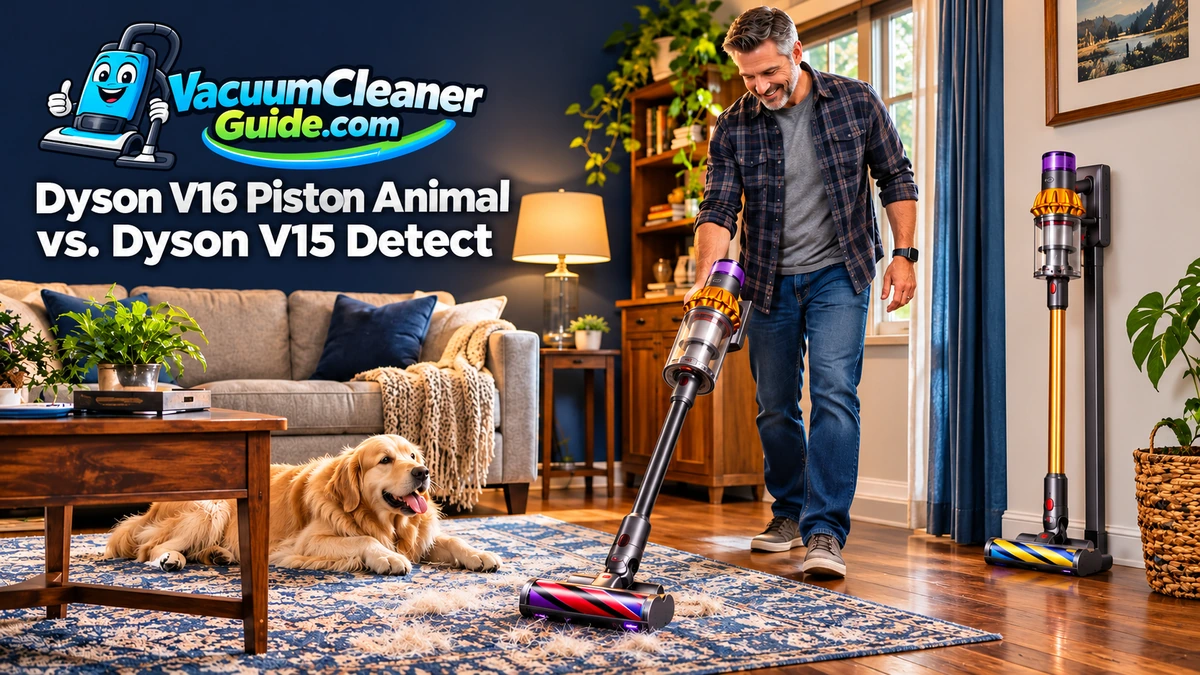
The Dyson V16 Piston Animal is the stronger machine on paper and the more substantial redesign. Dyson rates it at up to 315 air watts, compared with 240 air watts for the V15 Detect, and gives it a new All Floor Cones Sense cleaner head built around two conical brush bars that are designed to move long hair toward the bin instead of letting it wind around a conventional roller.
The V16 also changes one of the least glamorous parts of cordless ownership: emptying. Its CleanCompaktor bin compresses debris so the vacuum can hold much more material between emptying cycles. Dyson says the compressed bin can hold up to 30 days of dust and debris under its test assumptions.
That does not make the V15 Detect obsolete. The V15 remains a very capable premium cordless vacuum with 240 AW of published suction, up to 60 minutes of manufacturer-rated runtime, a lighter 6.83-pound body, and the familiar combination of a Digital Motorbar cleaner head and Fluffy Optic hard-floor head.
For a buyer starting from scratch and willing to pay for Dyson’s newest platform, the V16 is the better overall vacuum. For someone who can buy a V15 Detect at a meaningfully lower price, the older model can still be the better value because the practical gap is smaller than the 315-versus-240-AW headline suggests.
Daily Deals
Current category offers. Verify the final price at Amazon.

Dyson V15 Detect
$849.99 $598.50 30% OFF

Tineco PURE ONE Station 5
$459.00 $249.00 46% OFF

Tineco Pure ONE A90S Cordless Stick Vacuum Cleaner
$749.00 $449.00 40% OFF
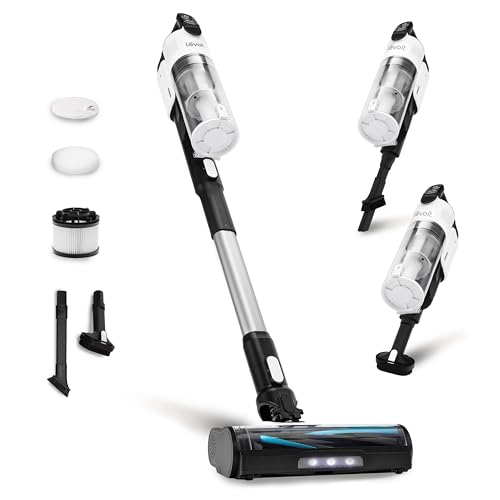
Levoit LVAC-200
$199.99 $129.99 35% OFF
As an Amazon Associate I earn from qualifying purchases.
Suction Power: V16 Has the Clear Advantage
Dyson rates the V16 Piston Animal at up to 315 AW in Boost mode at the inlet. The V15 Detect is rated at 240 AW.
That is a 75-AW difference in published maximum suction, and it gives the V16 more headroom for heavy carpet, pet hair, larger debris, and situations where a cordless vacuum is being asked to replace a full-size machine.
Maximum suction is not the same as everyday cleaning performance. Cleaner-head design, airflow, automatic power adjustment, floor type, and the mode you actually use all affect pickup. Most owners will not run either vacuum at maximum power for an entire cleaning session.
Still, the V16’s additional suction is meaningful. If your home has a lot of carpet, pets, tracked-in grit, or heavier debris, the newer motor gives the V16 the more convincing flagship specification.
The V15 Detect remains powerful enough that it should not be treated like a midrange cordless just because a newer Dyson exists. Its 240-AW rating is still a serious figure, and for hard floors or routine mixed-floor cleaning the difference may matter less than head design, weight, and price.
Cleaner Heads: This Is the Bigger Upgrade
The V16’s new All Floor Cones Sense cleaner head is more important than the suction increase for many buyers.
Dyson uses two rotating conical brush bars designed to move hair toward the center and into the bin. The company says the system can de-tangle long hair while the head also senses floor type and adjusts performance automatically.
That design targets a real ownership problem. Long hair and pet hair can accumulate around traditional cylindrical brush rolls, forcing the user to cut or pull hair away from the roller. The V16 is designed to reduce that maintenance while still handling carpet and hard floors with one primary head.
The V15 Detect uses a different two-head strategy. Its Digital Motorbar is the main multi-surface head, while the Fluffy Optic cleaner head is optimized for hard floors and illuminates fine dust.
There is an advantage to each approach. V16 reduces the need to swap heads and puts anti-tangle performance at the center of the design. V15 gives hard-floor users a dedicated soft roller that has become one of Dyson’s most recognizable cleaning tools.
If your home is mostly hard flooring and you like the Fluffy Optic experience, the V15’s older arrangement is not automatically inferior. If you want one head to move between surfaces with less hair-wrap maintenance, V16 is the more modern design.
Hair and Pet Homes
For pet owners and households with long hair, the V16 has the more compelling hardware.
Dyson’s V16 cleaner head uses conical brush bars specifically intended to spiral long hair off the brush and into the bin. Dyson states that its anti-tangle testing used hair up to 25 inches in Boost mode.
The V15 Detect’s Digital Motorbar also includes de-tangling technology, so this is not a case of anti-tangle versus no anti-tangle. The difference is that the V16 redesigns the primary head around dual cones rather than adding anti-tangle features to a more conventional bar.
If hair wrap has been a frequent maintenance chore with your current vacuum, that is one of the strongest reasons to step up to the V16.
Runtime and Charging
Dyson lists the V16 for up to 70 minutes of runtime and a charge time of about 3.5 hours. The V15 Detect is rated for up to 60 minutes and about 4.5 hours of charging.
Those are manufacturer maximums. Actual runtime changes with suction mode, powered attachments, floor resistance, debris load, and battery condition.
The V16 therefore has a modest runtime advantage, but the more useful upgrade may be the shorter listed charge time. A one-hour difference in charging can matter if the vacuum is used multiple times per day or if you regularly finish a cleaning session with a low battery.
Both platforms use swappable battery designs, so an additional compatible battery can extend cleaning time. Buyers should verify the exact battery compatibility for the configuration they purchase rather than assuming batteries interchange across Dyson generations.
Bin Design: V16 Changes the Ownership Experience
The V15 Detect uses a conventional 0.77-liter bin. It is large enough for a cordless vacuum, but pet hair and bulky debris can still fill it quickly.
The V16 uses Dyson’s CleanCompaktor system. The listed bin volume is 0.35 gallon, and the internal mechanism compresses debris as the bin fills. Dyson says this allows the bin to hold up to 30 days’ worth of dust and debris under its test conditions.
The exact number of days will vary dramatically by household. A home with two shedding dogs will not behave like a low-traffic apartment. The important point is not the 30-day claim by itself; it is that the V16 can physically compact debris instead of simply letting hair and lint consume the bin’s available volume.
That can reduce how often you stop to empty the machine and can also make the V16 feel more practical as a primary whole-home vacuum.
Weight and Handling
The V16 is listed at 7.5 pounds, while the V15 Detect is 6.83 pounds.
A difference of roughly two-thirds of a pound does not sound dramatic until you use a cordless vacuum above shoulder height, on stairs, or for several rooms in a row.
The V15 therefore keeps an ergonomic advantage. It is not an ultralight vacuum, but it is lighter than the V16 and may be easier to handle for users who prioritize maneuverability over maximum output.
The V16’s extra mass comes with real hardware improvements, but buyers with wrist, shoulder, or grip concerns should not dismiss the weight difference.
Filtration
Dyson lists the standard V16 Piston Animal with filtration rated to capture 99.99% of particles down to 0.1 microns. The V15 Detect listing cites 99.99% filtration to 0.3 microns.
These are manufacturer-published filtration figures and should not be interpreted as independent indoor-air-quality testing. Both are sealed premium cordless systems designed to capture fine particles rather than simply exhausting them back into the room.
For allergy-conscious buyers, both are strong options. V16 has the stronger published filtration threshold, but normal maintenance still matters: filters need to be cleaned as directed and correctly reinstalled.
Tools and Daily Convenience
The V16 adds built-in tool access in the wand, reducing the number of times you have to stop and search for a separate crevice or dusting tool. It also supports Dyson’s newer tool ecosystem and optional configurations such as Floor Dok or Submarine wet-cleaning versions.
The V15 Detect has a mature accessory ecosystem and has been on the market long enough that replacement tools, batteries, and compatible parts are familiar to many owners.
That maturity is one reason the V15 remains attractive. A newer platform can bring better hardware, but the older machine has years of established ownership experience behind it.
Is the V16 Worth the Upgrade From a V15 Detect?
If you already own a working V15 Detect, the answer is usually no unless one of the V16’s specific upgrades solves a problem you actually have.
The V16 gives you more maximum suction, better long-hair management, a longer headline runtime, faster listed charging, and a compressing bin. Those are genuine improvements.
But the V15 Detect is already a premium cordless vacuum. If it still cleans your floors well, the V16 does not transform the basic job enough to make replacement automatically sensible.
An upgrade makes more sense if you are frustrated by hair wrap, constantly empty the V15’s bin, want the newest all-floor head, or need more suction for carpet-heavy cleaning.
If your V15 is working well and your main surfaces are hard floors, keeping it is the more economical decision.
Which One Should a New Buyer Choose?
Choose the V16 Piston Animal if you want the strongest Dyson cordless platform and plan to keep it for years. The newer cleaner head, 315-AW maximum suction, compressing bin, and 70-minute runtime make it the more complete machine.
Choose the V15 Detect if price matters more than having the newest design. It still gives you strong 240-AW maximum suction, a dedicated Fluffy Optic hard-floor head, the Digital Motorbar, excellent filtration, and a lighter body.
The V15 becomes especially attractive when the price gap is large. The V16 is better, but the V15 can deliver most of the everyday benefit for substantially less money when discounted.
Best for Different Types of Buyers
Best for Carpet-Heavy Homes: V16 Piston Animal
More published suction and the newer all-floor head give the V16 the stronger case for homes with significant carpet.
Best for Long Hair and Heavy Shedding: V16 Piston Animal
The dual conical brush bars are the clearest generational upgrade for hair management.
Best for Hard-Floor-Focused Homes: V15 Detect Can Still Make Sense
The Fluffy Optic head remains an excellent hard-floor tool, and the lower weight can be more valuable than maximum suction on smooth surfaces.
Best for Buyers Who Hate Emptying the Bin: V16 Piston Animal
The CleanCompaktor system is a practical convenience feature rather than a specification that only matters on paper.
Best Value When Heavily Discounted: V15 Detect
If the V15 is available for much less than the V16, the older model’s 240-AW power, mature tool set, and lighter body make it difficult to dismiss.
Flying Off the Shelves
Popular picks from this category. Verify availability and price at Amazon.
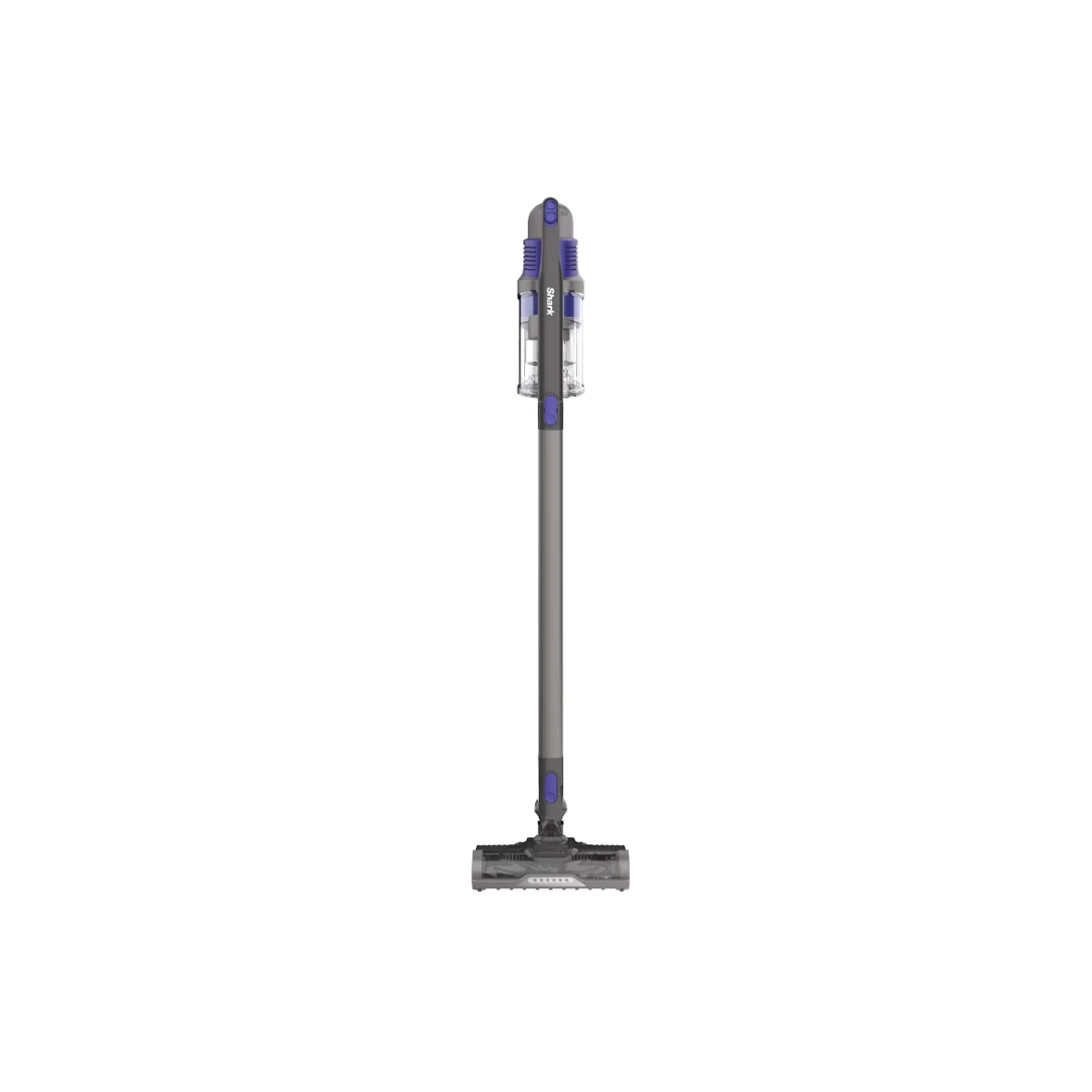
Shark Pet Cordless IX141
Current Amazon marketplace bestseller; 90-day trend not yet established
Check Amazon price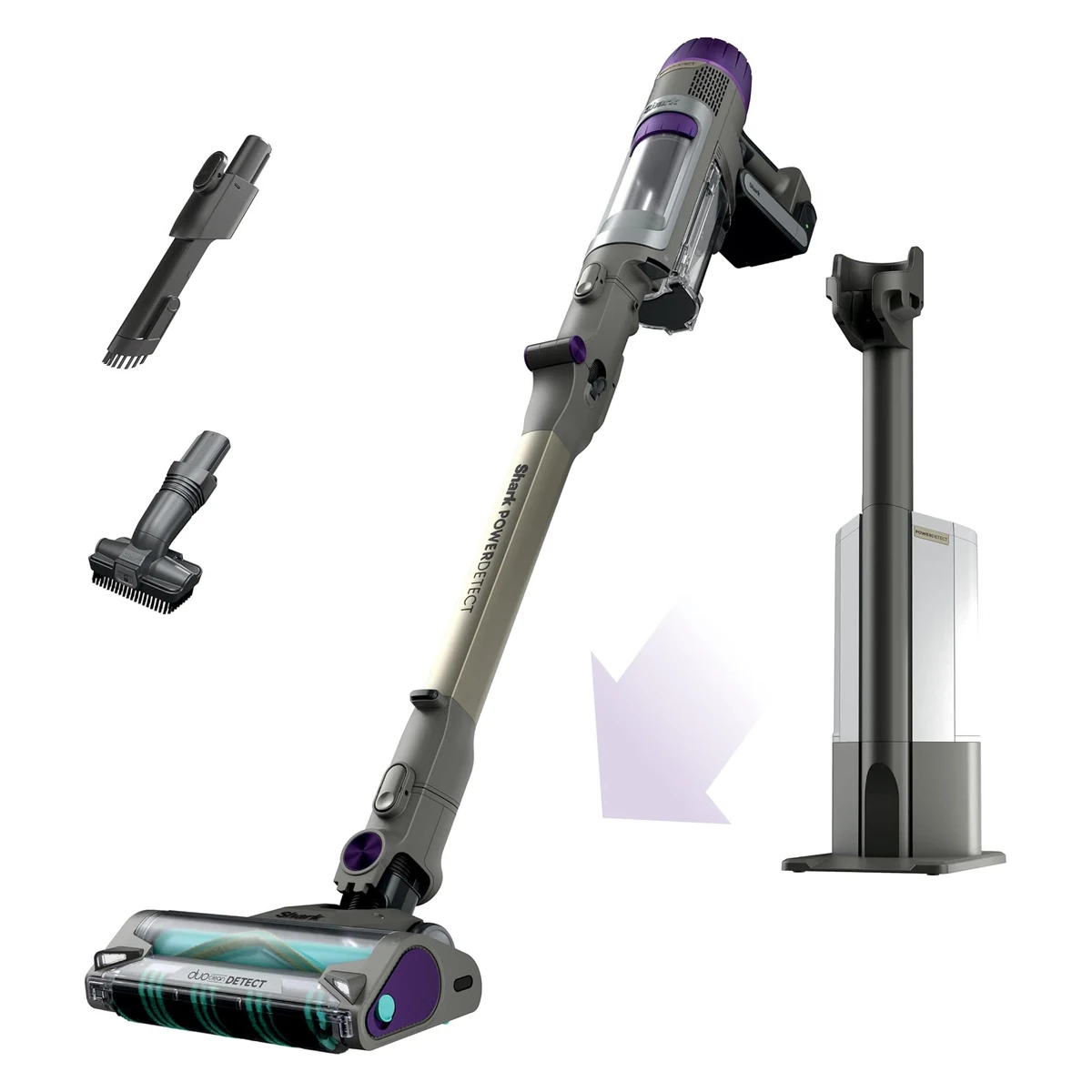
Shark PowerDetect Clean & Empty IP3251
Current Amazon marketplace bestseller; 90-day trend not yet established
Check Amazon price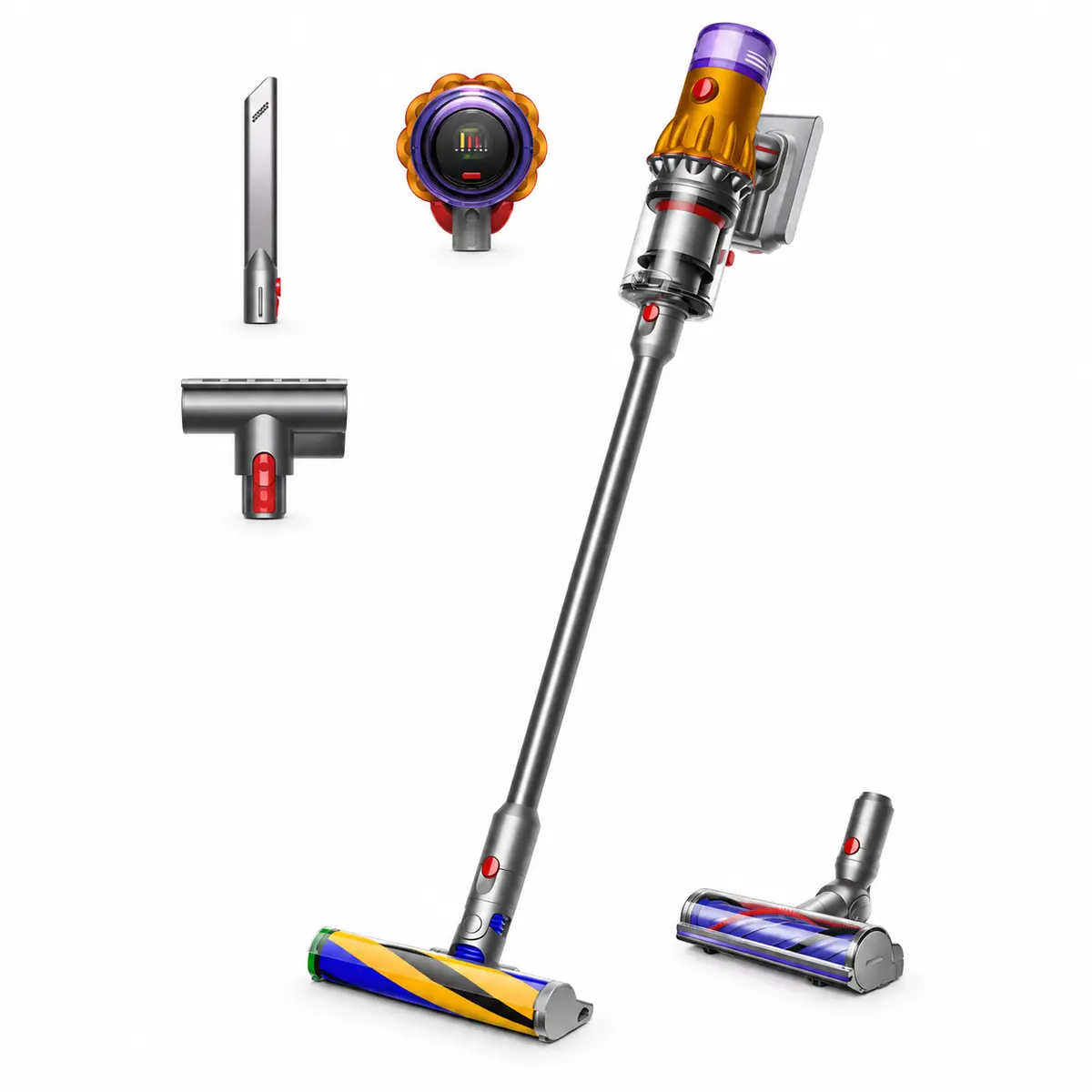
Dyson V15 Detect
Current Amazon marketplace bestseller; 90-day trend not yet established
Check Amazon price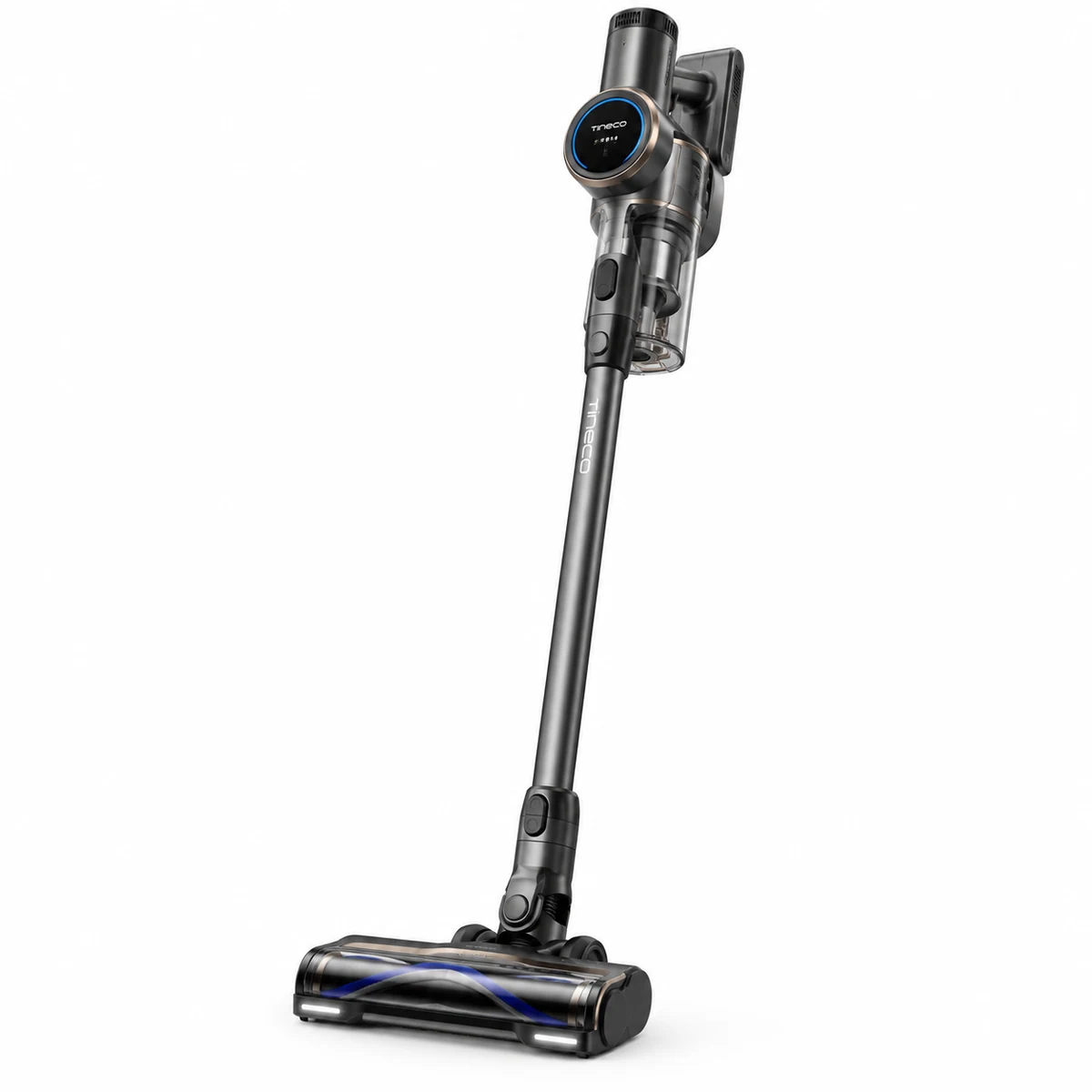
Tineco Pure ONE A90S Cordless Stick Vacuum Cleaner
Current Amazon marketplace bestseller; 90-day trend not yet established
Check Amazon priceAs an Amazon Associate I earn from qualifying purchases.
Frequently Asked Questions
Is the Dyson V16 more powerful than the V15 Detect?
Yes. Dyson publishes a maximum of 315 AW for the V16 Piston Animal and 240 AW for the V15 Detect.
Does the V16 run longer?
Dyson lists up to 70 minutes for the V16 and up to 60 minutes for the V15 Detect. Real runtime depends on mode, attachment, floor type, and battery condition.
Which one is better for pet hair?
Both are designed for hair pickup, but the V16 has the newer dual-cone anti-tangle cleaner head and is the stronger choice when long-hair wrap is a major concern.
Is the V15 Detect lighter?
Yes. Dyson lists the V15 Detect at 6.83 pounds and the standard V16 Piston Animal at 7.5 pounds.
Does the V16 replace the Fluffy Optic head?
The standard V16’s All Floor Cones Sense head is designed as a more universal primary head and includes dust illumination. Some V16 configurations may include additional heads, so check the exact package before buying.
Should I replace a working V15 Detect with a V16?
Usually not just for the sake of having the newest model. Upgrade when the V16’s extra suction, hair handling, compressed bin, or runtime specifically addresses a limitation you notice with the V15.
Final Verdict
The Dyson V16 Piston Animal is the better vacuum. It is more powerful, has a smarter new cleaner-head design, runs longer on the manufacturer’s maximum rating, charges faster, and introduces a compressing bin that can reduce one of the most frequent chores of cordless ownership.
The Dyson V15 Detect is the better value when the price difference is substantial. It remains a strong premium cordless vacuum, is lighter, and still provides enough suction and floor-head capability for most homes.
For a new buyer who wants Dyson’s best current cordless platform and expects to keep it for several years, choose the V16. For a bargain-conscious buyer who finds a V15 Detect at a steep discount, the V15 is still a very sensible purchase.
The upgrade is worth paying for when you value the V16’s specific improvements. It is not worth replacing a healthy V15 simply because the model number is newer.