Cordless
Cordless Vacuums vs Upright Vacuums: Which Is Better in 2026?

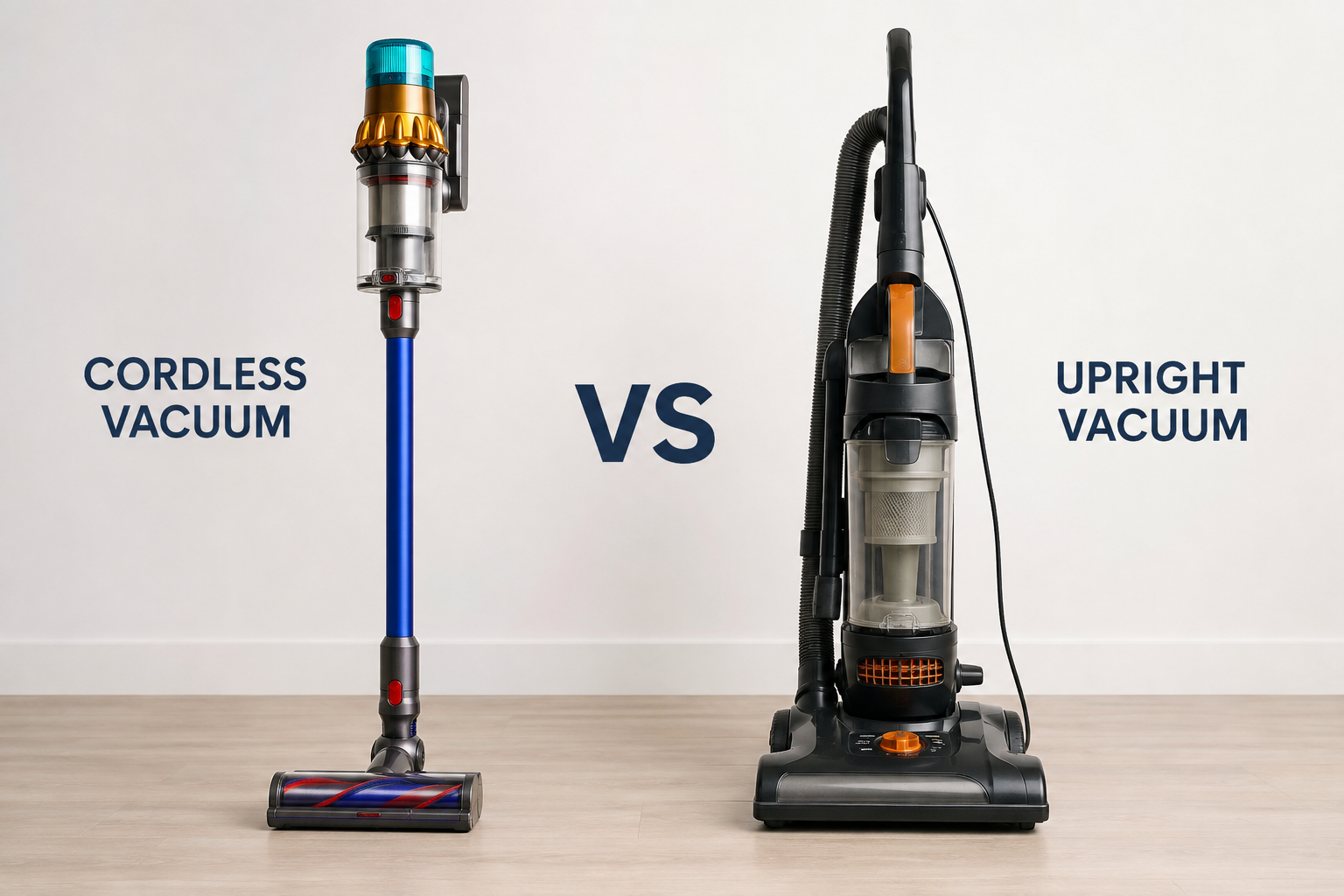
Choosing between a cordless vacuum and an upright vacuum sounds simple until you start comparing them. Cordless vacuums are lighter, easier to grab, and much better for stairs and quick cleanups. Upright vacuums offer unlimited runtime and are often better suited to long cleaning sessions and heavily carpeted homes.
Neither design is automatically better. The better vacuum is the one that matches how you actually clean.
For many homes, a cordless vacuum is now powerful enough to serve as the primary vacuum. But if you have lots of carpet, heavy shedding, or regularly clean the entire house in one session, a traditional upright still has some important advantages.
Here is how they compare.
Quick Picks
Disclosure: Some links on this page are affiliate links. We may earn a commission if you make a purchase, at no extra cost to you. As an Amazon Associate I earn from qualifying purchases.
Choose a cordless vacuum if you want: lightweight cleaning, fast pickups, easier stairs, better maneuverability, simple storage, or a vacuum you are more likely to grab several times a week.
Choose an upright vacuum if you want: unlimited runtime, larger dirt capacity, sustained carpet cleaning, fewer battery concerns, or a machine primarily used for full-house cleaning sessions.
For homes with mostly hard floors, apartments, stairs, or frequent small messes, we generally favor cordless.
Cordless vacuums shoppers are buying heavily right now.
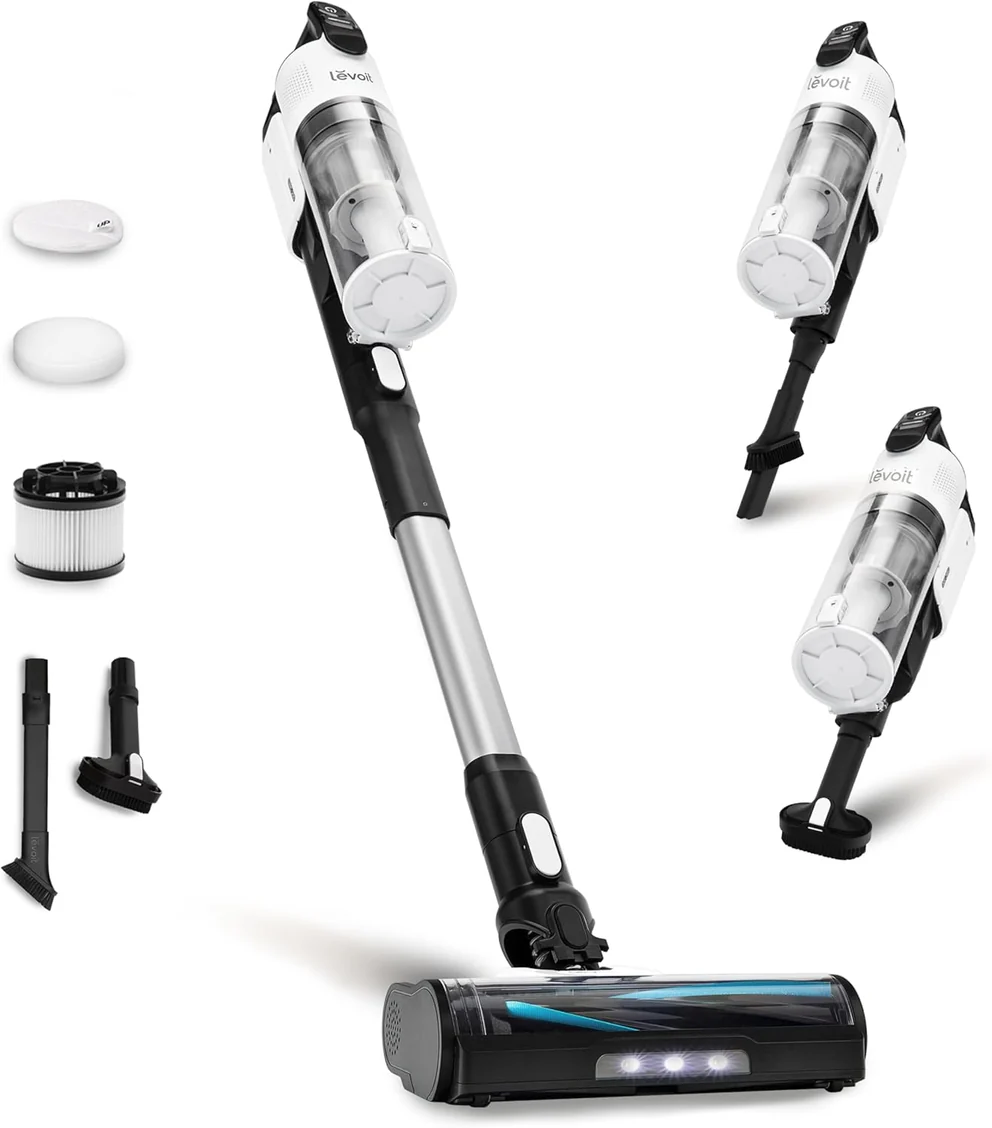
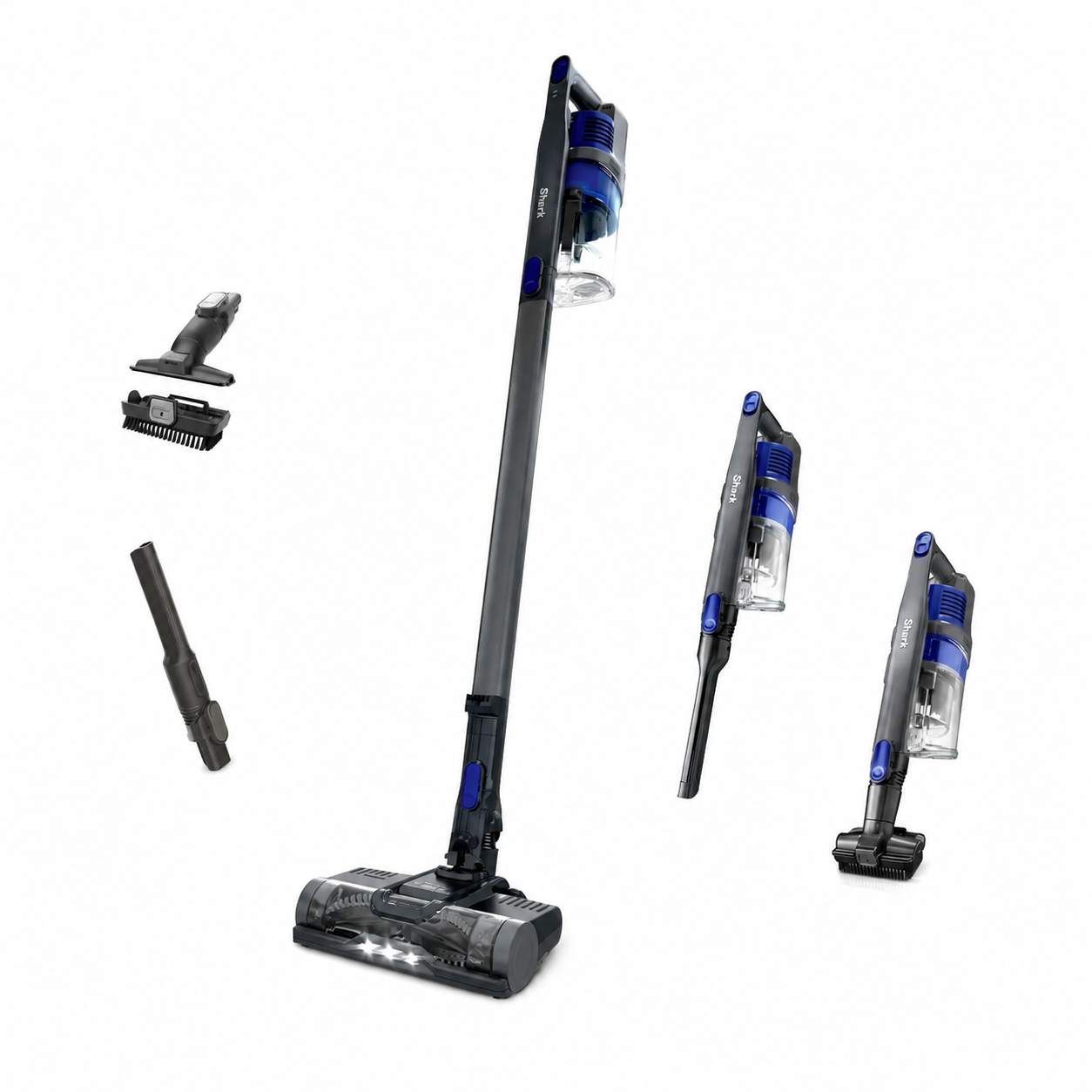
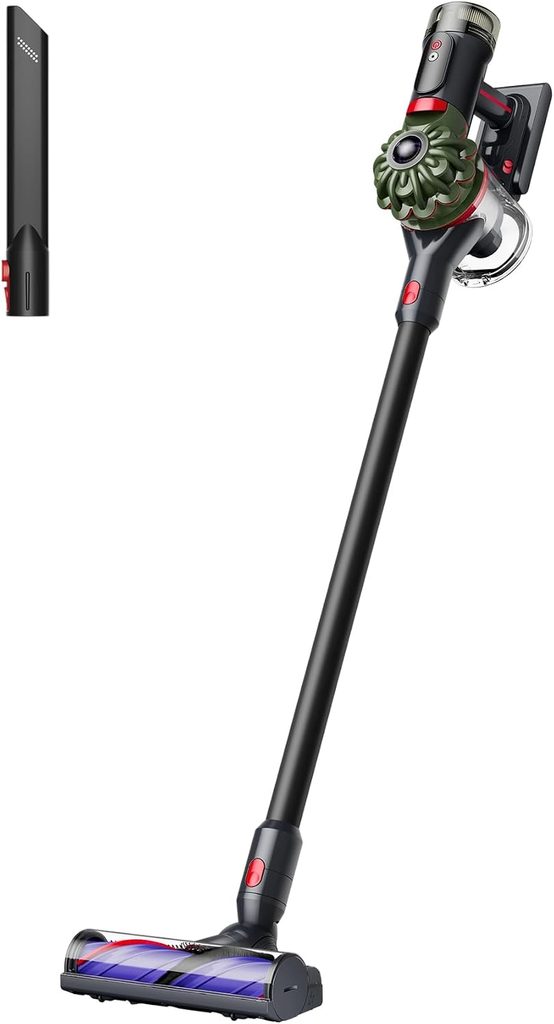
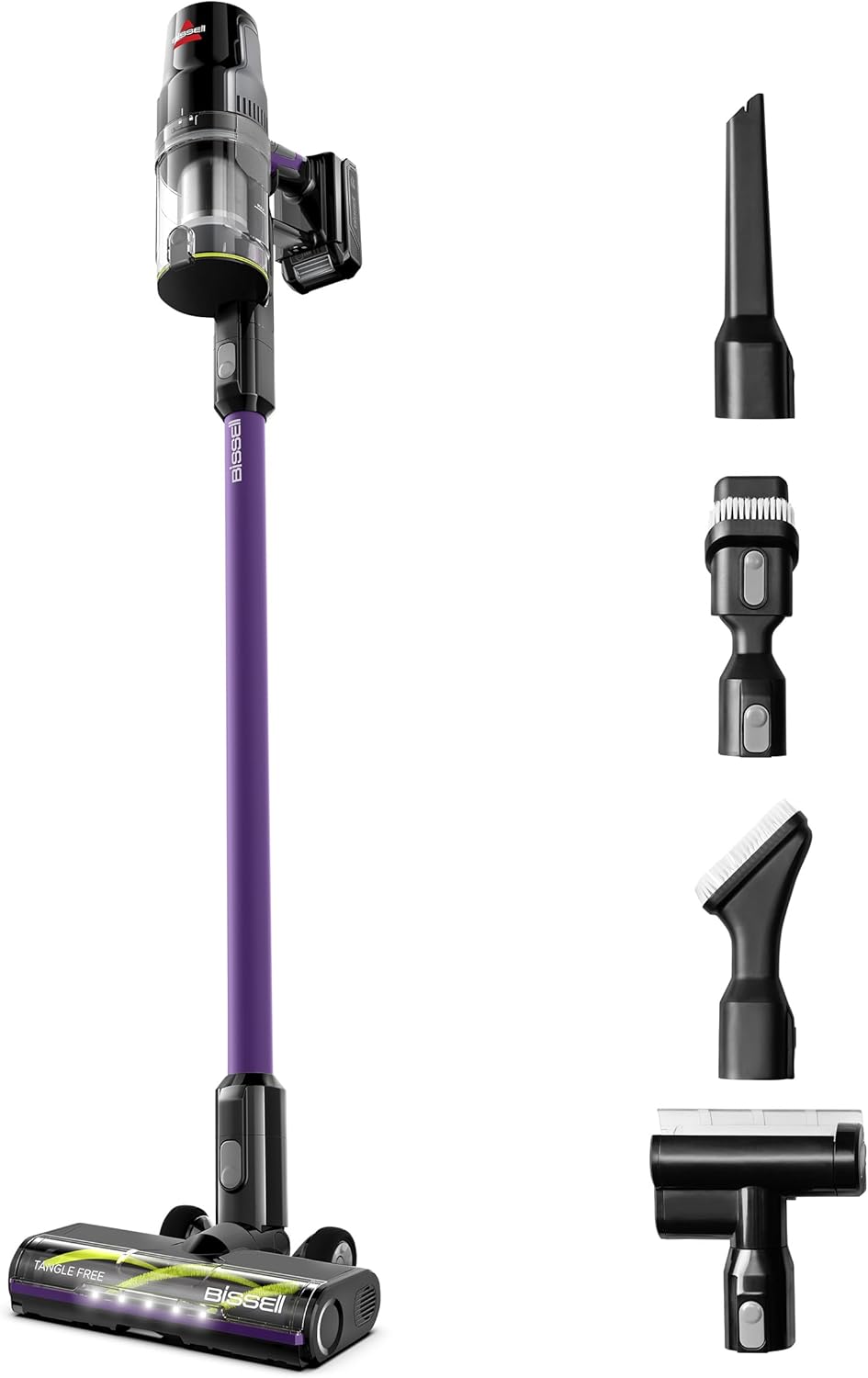
Based on current Amazon sales signals. Updated September 2026.
For large carpeted homes or households that prefer one long weekly cleaning session, an upright can still make more sense.
Cordless vs Upright Vacuum Comparison
| Feature | Cordless Vacuum | Upright Vacuum |
|---|---|---|
| Quick cleanups | Excellent | Fair |
| Carpet deep cleaning | Good to excellent | Excellent |
| Hard floors | Excellent | Good to excellent |
| Stairs | Excellent | Fair |
| Weight | Usually lighter | Usually heavier |
| Runtime | Battery limited | Unlimited while plugged in |
| Dirt capacity | Usually smaller | Usually larger |
| Storage | Compact | Requires more floor space |
| Cars and upholstery | Excellent | Depends on hose/tools |
| Large homes | Good with enough battery | Excellent |
| Pet hair | Good to excellent | Good to excellent |
| Maintenance | Battery + filters + brush roll | Filters + brush roll + belts depending on model |
Cleaning Power
Upright vacuums have traditionally had the advantage in cleaning power, especially on carpet. A corded upright can run continuously at full power without worrying about battery life, and full-size designs usually have larger floor heads and dirt bins.
That advantage is no longer as dramatic as it once was.
Modern premium cordless vacuums can provide very strong carpet and hard-floor performance. Models such as the Dyson V15 Detect and Shark Stratos show that cordless vacuums are no longer limited to light surface cleaning.
Still, if your home has thick wall-to-wall carpet and you routinely vacuum several rooms at once, an upright remains a strong choice.
For readers primarily concerned with carpet performance, see our guide to the best cordless vacuums for carpet and rugs.
Convenience and Everyday Cleaning
This is where cordless vacuums have the clearest advantage.
There is no cord to unwind, no outlet to find, and no machine to drag from room to room. Pick it up, press the button, clean the mess, and put it away.
That convenience matters more than it may seem.
A vacuum that takes 15 seconds to grab is much easier to use after breakfast crumbs hit the floor, the dog leaves hair across the hallway, or someone tracks dirt through the house.
An upright can handle all of those jobs, but most people are less likely to pull out a full-size vacuum for a 90-second cleanup.
If that sounds like how you clean, our best cordless vacuums for quick cleanups guide focuses specifically on easy grab-and-go options.
Battery Life vs Unlimited Runtime
The biggest limitation of a cordless vacuum remains its battery.
Manufacturers may advertise long maximum runtimes, but actual runtime depends heavily on the cleaning mode, floor type, attachments, and suction setting. Higher-power modes can drain a battery substantially faster than low-power settings.
For an apartment or moderate-size home, that may not matter.
For a 3,000-square-foot house being cleaned from top to bottom, it absolutely can.
An upright avoids that issue completely. Plug it in and it keeps running.
Some cordless vacuums reduce the problem with removable batteries. A second charged battery can effectively double available cleaning time without buying another vacuum.
If runtime is one of your biggest concerns, see our best cordless vacuums with removable batteries.
Carpet
If your home is predominantly carpeted, the decision becomes closer.
A traditional upright is built around floor cleaning. Its larger cleaner head, continuous power, brush roll, and heavier design can be advantageous when working through several carpeted rooms.
Cordless vacuums have improved dramatically, however. A good cordless vacuum with a motorized brush roll can handle everyday carpet cleaning, pet hair, and tracked-in debris very well.
Our general rule:
Mostly carpet + long cleaning sessions: lean upright.
Mixed floors + frequent cleaning: lean cordless.
Carpet plus stairs: cordless becomes much more attractive because carrying a full-size upright between levels can get old quickly.
Hard Floors
Cordless vacuums are particularly well suited to hard flooring.
They are easy to maneuver around furniture, lightweight enough for frequent use, and many modern models include floor heads designed to pick up fine dust and larger debris without scattering it.
The absence of a cord is also especially noticeable when moving through kitchens, dining rooms, hallways, and open floor plans.
For homes dominated by wood, laminate, or similar surfaces, see our best cordless vacuums for hardwood floors.
Stairs
Cordless wins this category easily.
Carrying an upright up a staircase while managing a cord and hose can be awkward. Some uprights have detachable canisters or long hoses that make stairs easier, but they still rarely match the simplicity of a cordless stick vacuum that converts into a handheld.
Cordless vacuums also work well for stair edges, landings, upholstery, and rail-side debris.
We have a separate guide to the best cordless vacuums for stairs if stairs are an important part of your buying decision.
Weight and Maneuverability
Cordless vacuums generally weigh less and feel easier to maneuver.
That makes a difference when cleaning around dining chairs, underneath furniture, inside closets, up stairs, or above the floor.
Uprights usually carry more of their weight on the floor while cleaning, so their total weight does not always tell the whole story. But transporting an upright between floors is noticeably different from carrying a cordless vacuum.
Anyone who places a high priority on easy handling should also look at our best lightweight cordless vacuums.
Pet Hair
Either type can work very well in a pet household.
The vacuum format is less important than the specific features:
- Effective brush-roll design
- Strong pickup on your flooring
- Hair-resistant or anti-tangle brush roll
- Upholstery or pet tool
- Good filtration
- Easy-to-empty dirt bin
An upright may be preferable for a heavily carpeted home with multiple shedding pets because of its larger bin and unlimited runtime.
A cordless vacuum can be better for homes where pet hair is cleaned several times throughout the week from floors, furniture, stairs, and other surfaces.
Large Homes
Large homes expose the biggest weakness of cordless vacuums: battery limitations.
If you clean one room at a time or vacuum frequently, a cordless vacuum can still work well. Higher-end models also offer longer runtime, removable batteries, or automatic suction adjustment that helps conserve power.
If your routine is to clean every floor in the house in one long session, an upright eliminates battery planning altogether.
We compared several longer-running options in our guide to the best cordless vacuums for large homes.
Dirt Capacity
Upright vacuums usually have another practical advantage: larger dirt bins or bags.
Cordless vacuums prioritize compact size and low weight, which means smaller collection bins are common.
That is not a major problem for quick cleaning, but households with several pets or large amounts of carpet may empty a cordless vacuum more frequently.
Some newer cordless systems solve part of the problem with self-emptying docking stations.
See our best cordless vacuums with docking stations if reducing hands-on emptying is important to you.
Storage
Cordless vacuums generally require less storage space.
Many mount directly to a wall or sit on a compact charging dock. That makes them particularly attractive for apartments, condos, smaller homes, and utility closets where floor space is limited.
Uprights stand vertically but still take up more floor space.
For smaller spaces, our best cordless vacuums for apartments guide has additional recommendations.
Maintenance and Long-Term Ownership
Both styles require routine maintenance.
You will still need to clean filters, remove hair from brush rolls, empty dirt containers, and occasionally clean attachments.
Cordless vacuums add one additional long-term component: the battery.
Rechargeable batteries gradually lose capacity with use and age. A model with a replaceable battery is preferable if you plan to keep the vacuum for many years.
Upright vacuums eliminate battery aging but can have their own wear items depending on the design, including belts, hoses, filters, and brush-roll components.
Are Cordless Vacuums Powerful Enough to Replace an Upright?
For many homes, yes.
A quality modern cordless vacuum can handle everyday dirt, hard floors, carpet, pet hair, stairs, furniture, and quick cleanups well enough that a separate upright is unnecessary.
The strongest case for keeping an upright is still a large home with substantial carpet, heavy debris, or long cleaning sessions.
There is also nothing wrong with owning both.
A cordless vacuum can handle the daily work while an upright handles occasional deep cleaning. For some households, that combination is more practical than asking one machine to do everything.
Which One Should You Buy?
Buy a cordless vacuum if:
- You clean small messes frequently.
- You have stairs.
- You have mostly hard floors or mixed flooring.
- Lightweight handling matters.
- You want to clean cars or furniture.
- Storage space is limited.
- You prefer cleaning a little at a time.
Buy an upright vacuum if:
- Most of your home is carpeted.
- You vacuum the entire house at once.
- You do not want to think about battery runtime.
- You want a larger dirt capacity.
- You have a large home.
- Portability is less important than sustained cleaning.
The Bottom Line
For the average household choosing one vacuum today, we would lean toward a good cordless model.
Convenience is the biggest reason.
Modern cordless vacuums provide enough cleaning performance for most everyday situations while being much easier to use for stairs, hard floors, furniture, quick messes, and routine cleaning.
An upright remains the better specialist for homes where deep carpet cleaning and uninterrupted whole-house runtime matter more than portability.
The decision ultimately comes down to your cleaning habits.
If a lightweight cordless vacuum means you clean more often, that convenience can be more valuable than having maximum power sitting unused in the closet.
Frequently Asked Questions
Are upright vacuums more powerful than cordless vacuums?
Upright vacuums generally provide sustained power without battery limitations, making them especially well suited to long carpet-cleaning sessions. However, high-end cordless vacuums can now deliver excellent cleaning performance on both carpet and hard floors.
Can a cordless vacuum be your only vacuum?
Yes. For many apartments, small and medium-size homes, and homes with mixed flooring, a good cordless vacuum can serve as the primary vacuum.
Which is better for carpet?
An upright still has an advantage for large amounts of wall-to-wall carpet and extended cleaning sessions. A quality cordless vacuum can be an excellent choice for mixed flooring and regular carpet maintenance.
Which is better for pet hair?
Either can work well. Look for strong pickup, an effective brush roll, anti-tangle features, good filtration, and useful upholstery tools rather than choosing based only on whether the vacuum is cordless or upright.
Which is better for stairs?
Cordless vacuums are usually the better choice for stairs because they are lighter, easier to carry, and often convert into handheld vacuums.
Do cordless vacuum batteries need to be replaced?
Eventually, they may. Rechargeable batteries lose capacity over time. Models with user-replaceable batteries can be easier and less expensive to keep operating long term.


New Tineco Vacuums for 2026

New BISSELL Vacuums for 2026

New Dyson Vacuums for 2026

6 Best Robot Vacuums With Obstacle Avoidance in 2026

6 Best Budget Robot Vacuums in 2026

6 Best Robot Vacuums for Carpet in 2026

6 Best Cordless Vacuums With Removable Batteries in 2026

6 Best Cordless Vacuums With Strong Suction in 2026

6 Best Cordless Vacuums With Docking Stations in 2026

6 Best Cordless Vacuums for Allergies in 2026

6 Best Upright Vacuums With Height Adjustment in 2026
