
Disclosure: Some links on this page are affiliate links. We may earn a commission if you make a purchase, at no extra cost to you. As an Amazon Associate I earn from qualifying purchases.
Quick Comparison
| Feature | Shark PowerDetect IP3251 | Dyson V15 Detect (SV22) |
|---|---|---|
| Maximum manufacturer runtime | Up to 70 minutes at the handvac in Eco mode | Up to 60 minutes |
| Charging | About 6 hours | About 4.5 hours |
| Main floor system | DuoClean Detect with PowerDetect sensing | Digital Motorbar plus Fluffy Optic |
| Dust handling | Included Clean & Empty auto-empty base | 0.77 L onboard bin |
| Onboard dust cup | 0.7 qt | 0.77 L |
| Published suction | No directly comparable AW figure on Shark product page | 240 AW |
| Best fit | Buyers who want automatic emptying and adaptive cleaning | Buyers who want a lighter, proven premium cordless with strong published suction |
The Short Answer
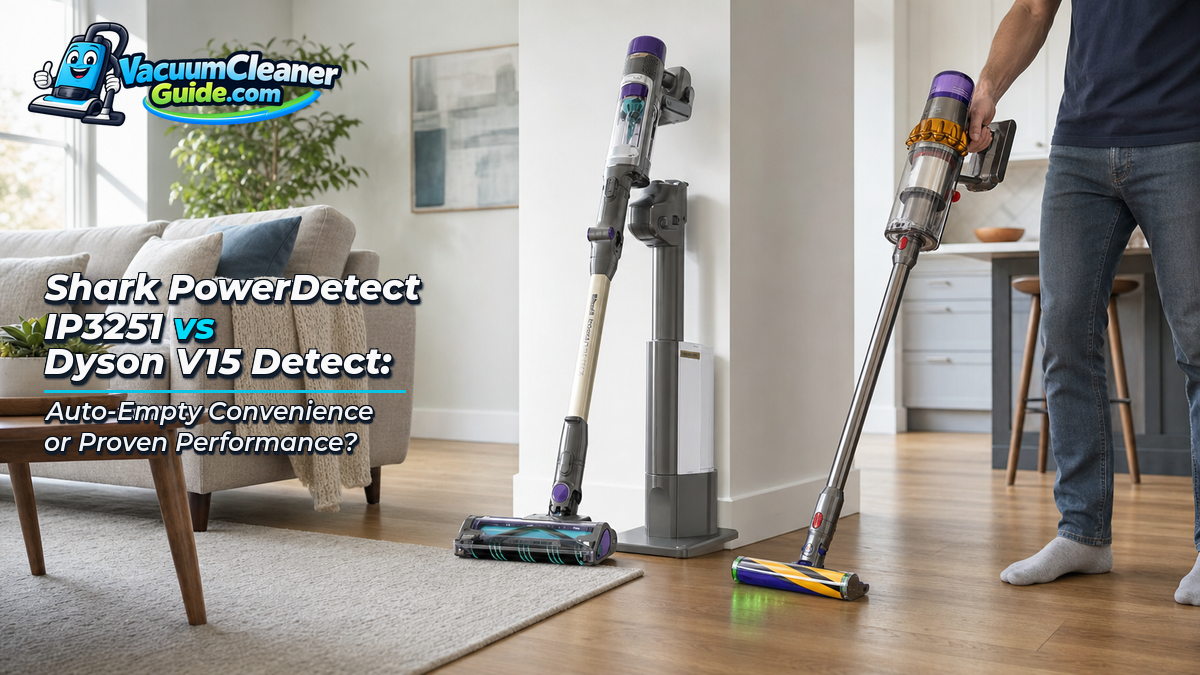
The Shark PowerDetect IP3251 is the better choice if automatic emptying is the feature you will appreciate every day. Its Clean & Empty base removes debris from the vacuum after use, recharges the battery, and can hold collected dirt for an extended period before the base itself needs attention.
The Dyson V15 Detect is the better choice if you want a lighter, more conventional premium cordless vacuum with a clear 240-AW maximum suction specification, a dedicated Fluffy Optic hard-floor head, and a mature accessory ecosystem.
Shark’s strength is ownership convenience. Dyson’s strength is a proven high-end cleaning platform.
For many busy households, the IP3251’s auto-empty base can make the bigger lifestyle difference. For buyers who do not want a large dock and prefer a lighter handheld machine, the V15 Detect remains extremely competitive.
Daily Deals
Current category offers. Verify the final price at Amazon.

Dyson V15 Detect
$849.99 $598.50 30% OFF

Tineco PURE ONE Station 5
$459.00 $249.00 46% OFF

Tineco Pure ONE A90S Cordless Stick Vacuum Cleaner
$749.00 $449.00 40% OFF
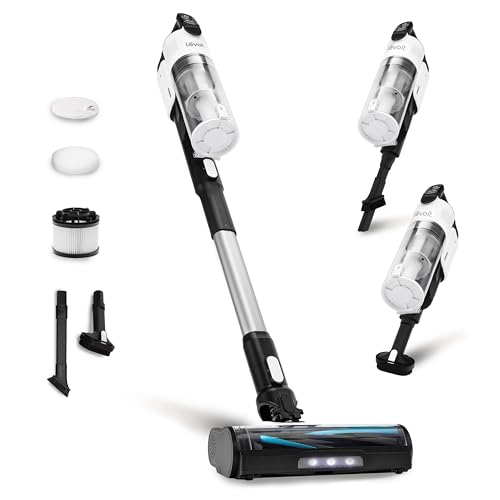
Levoit LVAC-200
$199.99 $129.99 35% OFF
As an Amazon Associate I earn from qualifying purchases.
Cleaning Power
Dyson publishes a maximum suction figure of 240 AW for the V15 Detect.
Shark does not publish an equivalent air-watt number for the IP3251 on its product page, so assigning it a numerical rank against Dyson would be unsupported. Shark instead cites standardized testing for its broader claims about debris cleaning and suction.
The V15 therefore gives buyers a more transparent headline suction specification. It has enough published power to serve as a primary cordless vacuum in many homes.
The IP3251’s cleaning story is more about how the machine adapts. PowerDetect technology responds to dirt, floor type, edges, and cleaning direction, changing behavior as conditions change.
If you want the stronger documented suction number, Dyson wins. If you want more automatic response during routine cleaning, Shark has the more feature-rich sensing package.
Auto-Empty Convenience
This is the Shark’s defining advantage.
After cleaning, the IP3251 docks and automatically transfers debris from the onboard cup into the base. Shark says the base can lock away dirt for up to 45 days under its assumptions.
That removes one of the most repetitive parts of cordless ownership. Instead of emptying the dust cup after every full cleaning session, you can usually dock the vacuum and leave the debris in the base until the larger container needs attention.
The V15 Detect has a conventional onboard bin. It is easy to empty, but the user still performs that task manually.
For pet owners, families, and anyone who vacuums frequently, automatic emptying can be more valuable than a modest difference in cleaner-head technology.
Floor-Head Design
The IP3251 uses Shark’s DuoClean Detect floor system. It combines dual brush rolls with PowerDetect sensing so the vacuum can react to floor type, debris, edges, and direction of movement.
The V15 Detect normally pairs two specialized heads: the Digital Motorbar for mixed surfaces and carpet, and the Fluffy Optic cleaner head for hard floors.
This creates two different philosophies.
Shark aims to reduce the number of decisions the user makes during cleaning. The system detects conditions and adjusts.
Dyson gives the buyer dedicated tools, including the soft-roller Fluffy Optic head that is especially well suited to hard floors and fine dust.
For a mixed-floor home where you want one main head and more automation, Shark is attractive. For a hard-floor-heavy home where you value a dedicated soft roller, Dyson has the stronger setup.
Runtime
Shark advertises up to 70 minutes, measured at the handvac in Eco mode.
Dyson advertises up to 60 minutes for the V15 Detect.
Those numbers are not directly equivalent to powered floor cleaning at higher suction settings. Runtime falls when motorized heads, carpet resistance, or stronger modes are used.
Shark has the higher headline number, but its stated test condition is important. The correct takeaway is that both are designed for substantial whole-home sessions, not that the Shark will always run ten minutes longer in normal floor cleaning.
Charging Time
Dyson lists about 4.5 hours to charge the V15 Detect.
Shark lists about six hours for the IP3251.
That gives Dyson an advantage when the battery needs to be replenished quickly between cleaning sessions.
The Shark’s dock does make charging automatic whenever the vacuum is returned to base, which can reduce how often the longer charge time becomes noticeable.
Weight and Maneuverability
Dyson lists the V15 Detect at 6.83 pounds.
Shark’s product listing gives a system weight that includes its broader Clean & Empty package rather than a directly comparable handheld-vacuum figure, so using that number as a stick-vacuum weight comparison would be misleading.
The V15 has a reputation within Dyson’s lineup as a full-size premium cordless rather than an ultralight model, but its published 6.83-pound figure is still useful for buyers who care about stairs and above-floor work.
If minimizing the amount you carry is a major priority, Dyson has the clearer documented advantage.
Pet Hair and Long Hair
Both machines target pet and hair-heavy homes.
Shark combines a dual-brushroll floor head with pet-focused accessories and the auto-empty dock. The dock can be especially helpful because pet fur quickly fills a small cordless dust cup.
Dyson uses the Digital Motorbar’s de-tangling design and adds the Hair Screw tool in many V15 configurations for upholstery, stairs, and pet beds.
The Shark is the better system if fur volume and bin emptying are the primary frustrations.
The Dyson remains strong if brushroll hair control and handheld attachment versatility matter more.
Hard Floors
V15 Detect has a strong argument on hard floors because of the Fluffy Optic head.
The soft roller is designed around hard-surface pickup, while the angled illumination makes fine dust easier to see.
Shark handles hard floors with the DuoClean Detect system and can automatically change behavior based on floor conditions.
Both are capable. Dyson gives you the more specialized hard-floor tool; Shark gives you the more automated all-floor workflow.
Carpet
The Digital Motorbar and 240-AW maximum make the V15 a strong carpet option.
Shark’s FloorDetect and DirtDetect behavior can increase cleaning effort where the machine senses conditions that call for it.
Without a directly comparable Shark AW figure, there is no defensible way to claim that one has more raw suction based purely on manufacturer specifications. The better choice depends on whether you value Dyson’s published power or Shark’s automation and auto-emptying.
Storage
The Shark system needs a dedicated footprint for the Clean & Empty base.
That is ideal when you have a laundry room, utility area, closet corner, or other place where the dock can remain plugged in.
The V15 uses a simpler charging arrangement and takes up less floor space if wall-mounted.
Apartment dwellers or buyers with limited storage may prefer Dyson for that reason alone.
Maintenance
Neither vacuum is maintenance-free.
Shark reduces dust-cup handling, but its base, filters, and brush rolls still need periodic care.
Dyson requires manual bin emptying and routine filter washing, along with cleaner-head inspection.
The best maintenance system is the one you are likely to keep up with. Shark automates one important step; Dyson keeps the overall system simpler.
Best for Different Types of Buyers
Best for Auto-Empty Convenience: Shark IP3251
The included base changes the daily routine more than any other feature in this comparison.
Best for Hard Floors: Dyson V15 Detect
The Fluffy Optic head remains a strong specialized tool for smooth surfaces and visible fine dust.
Best for Frequent Pet-Hair Cleanup: Shark IP3251
Automatic emptying is useful when fur quickly consumes onboard bin space.
Best for Faster Charging: Dyson V15 Detect
Its listed charge time is shorter.
Best for Small Storage Areas: Dyson V15 Detect
It does not require the larger Clean & Empty station.
Flying Off the Shelves
Popular picks from this category. Verify availability and price at Amazon.
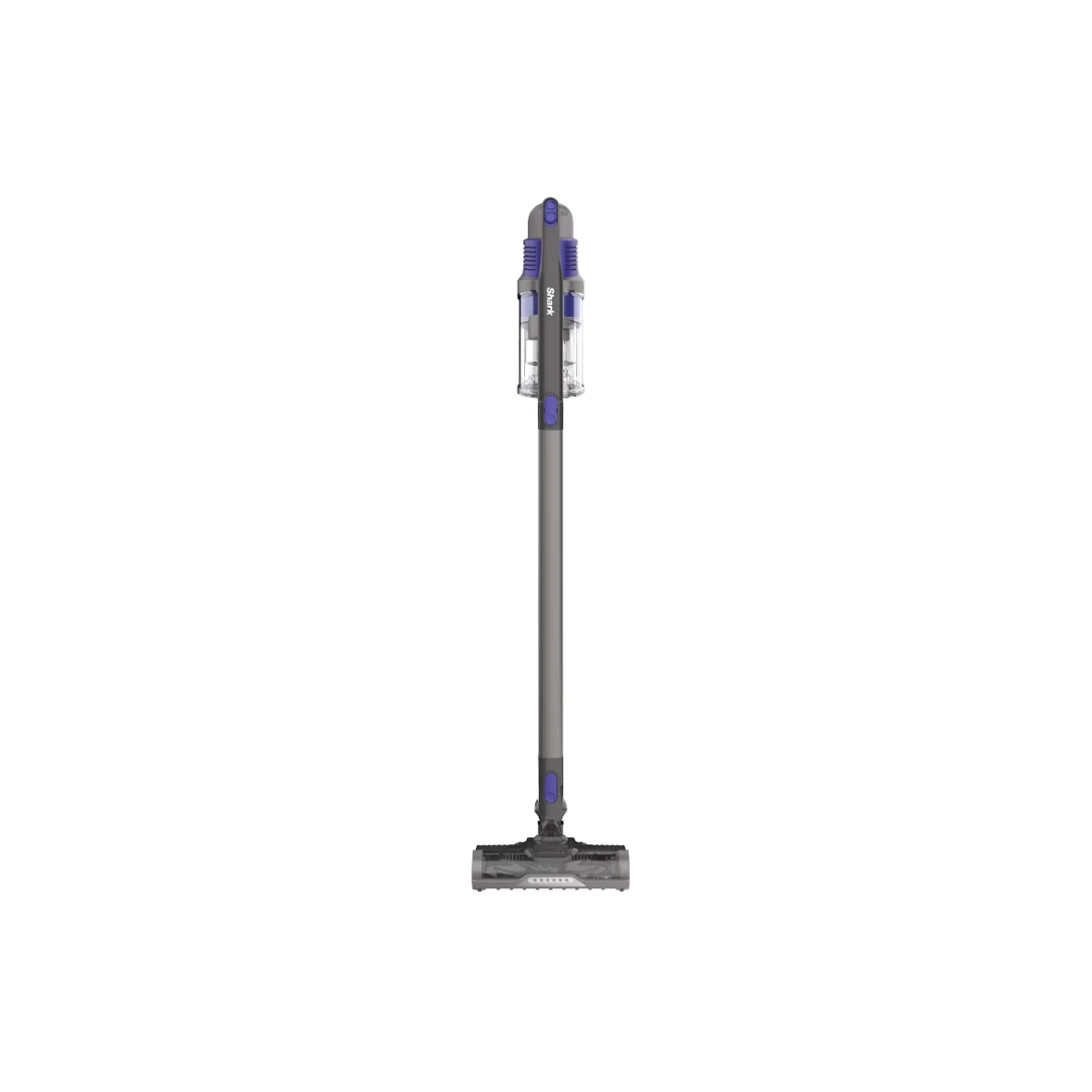
Shark Pet Cordless IX141
Current Amazon marketplace bestseller; 90-day trend not yet established
Check Amazon price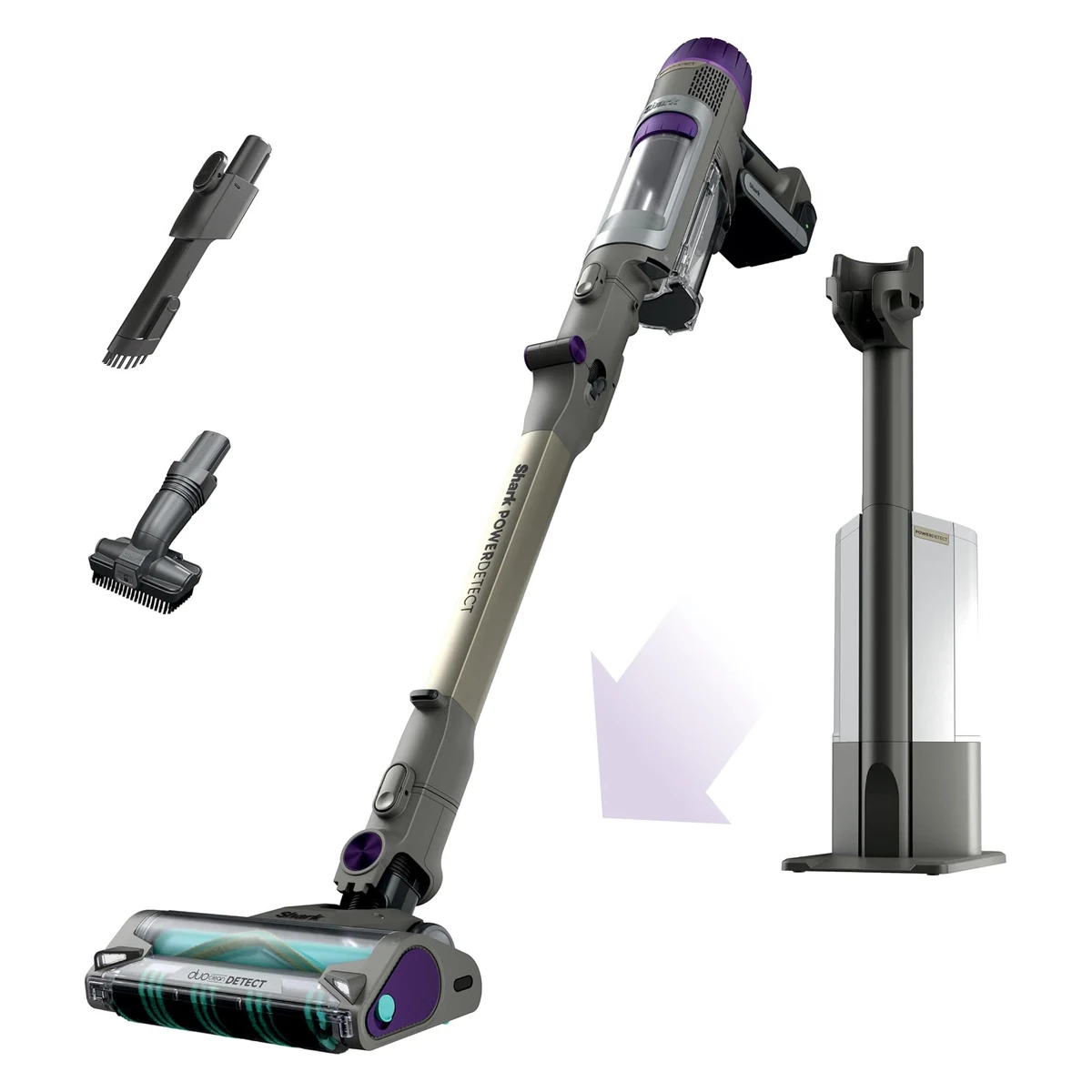
Shark PowerDetect Clean & Empty IP3251
Current Amazon marketplace bestseller; 90-day trend not yet established
Check Amazon price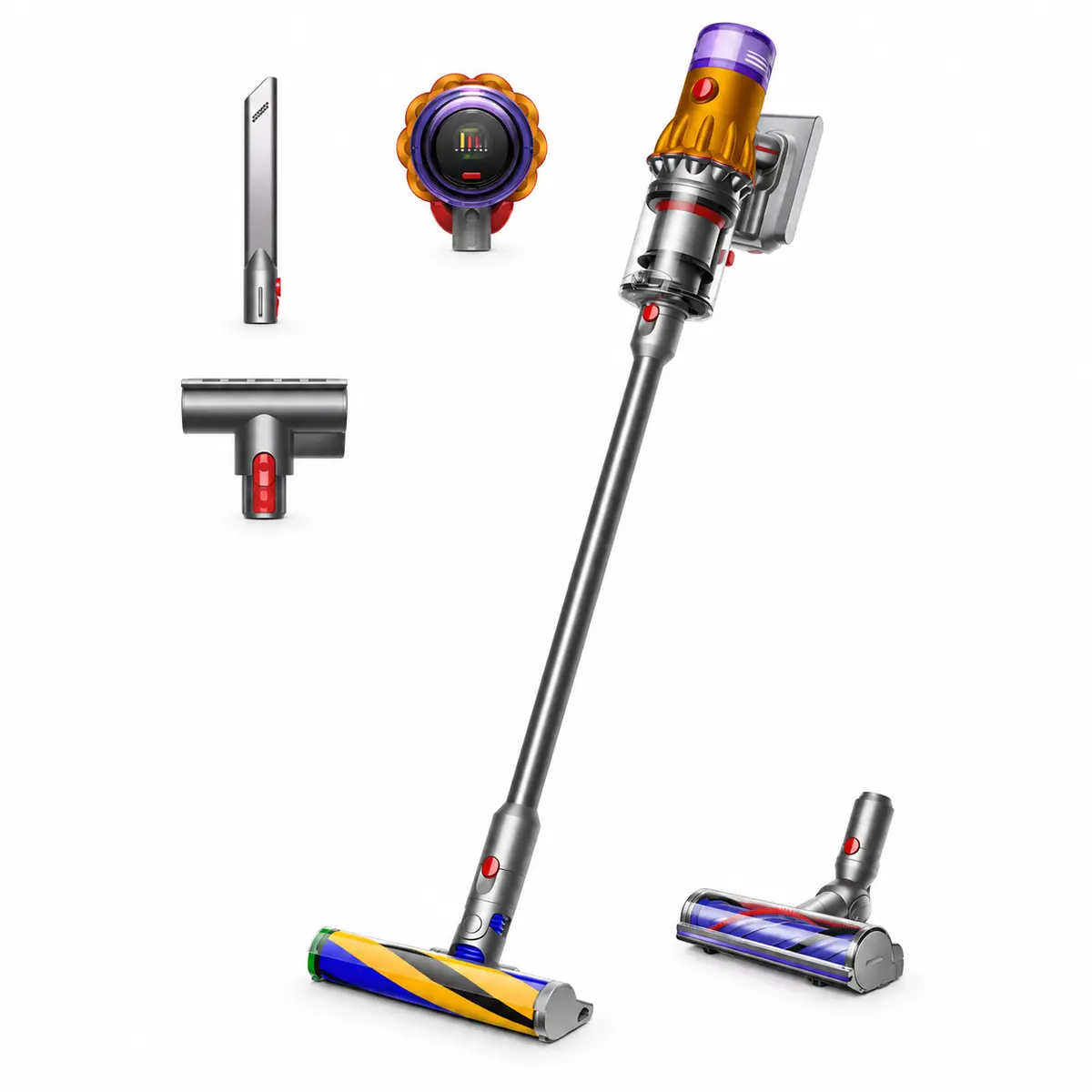
Dyson V15 Detect
Current Amazon marketplace bestseller; 90-day trend not yet established
Check Amazon price
Tineco Pure ONE A90S Cordless Stick Vacuum Cleaner
Current Amazon marketplace bestseller; 90-day trend not yet established
Check Amazon priceAs an Amazon Associate I earn from qualifying purchases.
Frequently Asked Questions
Is the Shark IP3251 more powerful than the Dyson V15 Detect?
The manufacturers do not provide directly comparable suction numbers. Dyson publishes 240 AW for V15 Detect; Shark does not publish an equivalent AW figure for IP3251 on its product page.
Which runs longer?
Shark advertises up to 70 minutes at the handvac in Eco mode. Dyson advertises up to 60 minutes. Real floor-cleaning runtime depends on mode, attachment, and surface.
Which empties itself?
The Shark IP3251 includes a Clean & Empty base. The Dyson V15 Detect uses a conventional manual-empty bin.
Which is better for hard floors?
The V15 Detect has the advantage if you want a dedicated Fluffy Optic soft-roller head. Shark is attractive if you prefer one automated all-floor system.
Which is easier to store?
V15 Detect generally needs less floor space because it does not depend on a large auto-empty base.
Final Verdict
The Shark PowerDetect IP3251 is the better choice for buyers who want a more automated cordless-vacuum routine. Its auto-empty base, PowerDetect sensing, and 70-minute headline runtime make it easy to keep ready for frequent cleaning.
The Dyson V15 Detect is the better choice for buyers who value a lighter traditional cordless format, a clear 240-AW maximum suction specification, a dedicated Fluffy Optic head, and faster listed charging.
If you hate emptying a cordless dust cup, buy the Shark. If you want a proven premium stick vacuum without committing floor space to an auto-empty station, the V15 Detect remains the smarter fit.