
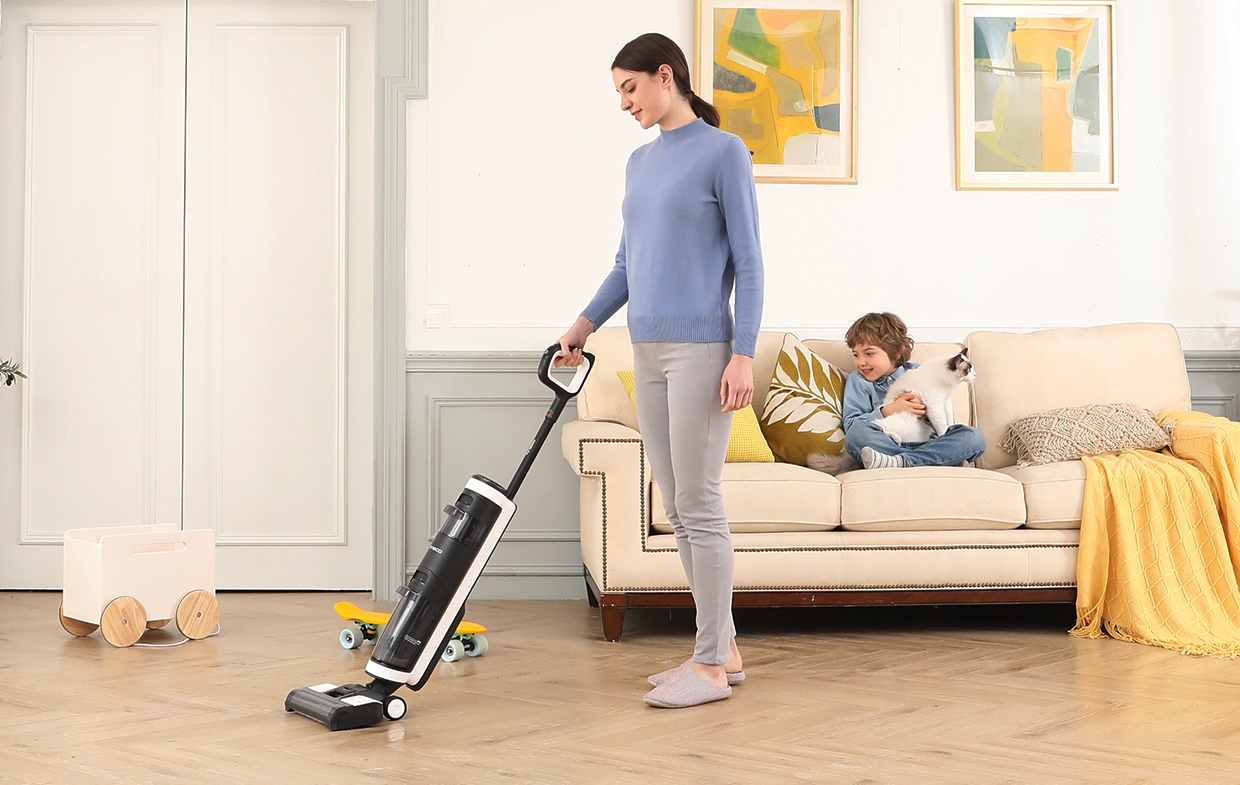
This Tineco FLOOR ONE beginner guide starts with the most important thing to understand: it looks like a cordless vacuum, but treating it like a normal stick vacuum is the fastest way to misunderstand it. The FLOOR ONE family is designed primarily as a wet-dry floor washer that picks up debris while washing sealed hard flooring in the same pass.
Tineco FLOOR ONE Beginner Guide: What Does It Actually Do?
On compatible hard floors, the machine dispenses water and cleaning solution, agitates the surface with a roller, picks up dry debris and dirty liquid, and separates clean water from dirty recovery water. Many models also use Tineco’s iLoop sensor to adjust cleaning behavior based on detected dirt.
Do You Need to Vacuum First?
For routine hard-floor messes, Tineco says no. FLOOR ONE machines are designed to vacuum debris and wash at the same time. That is the core reason the product exists.
Disclosure: Some links on this page are affiliate links. We may earn a commission if you make a purchase, at no extra cost to you. As an Amazon Associate I earn from qualifying purchases.
Quick Picks
A strong FLOOR ONE option for first-time buyers: Tineco FLOOR ONE S7 Stretch Ultra
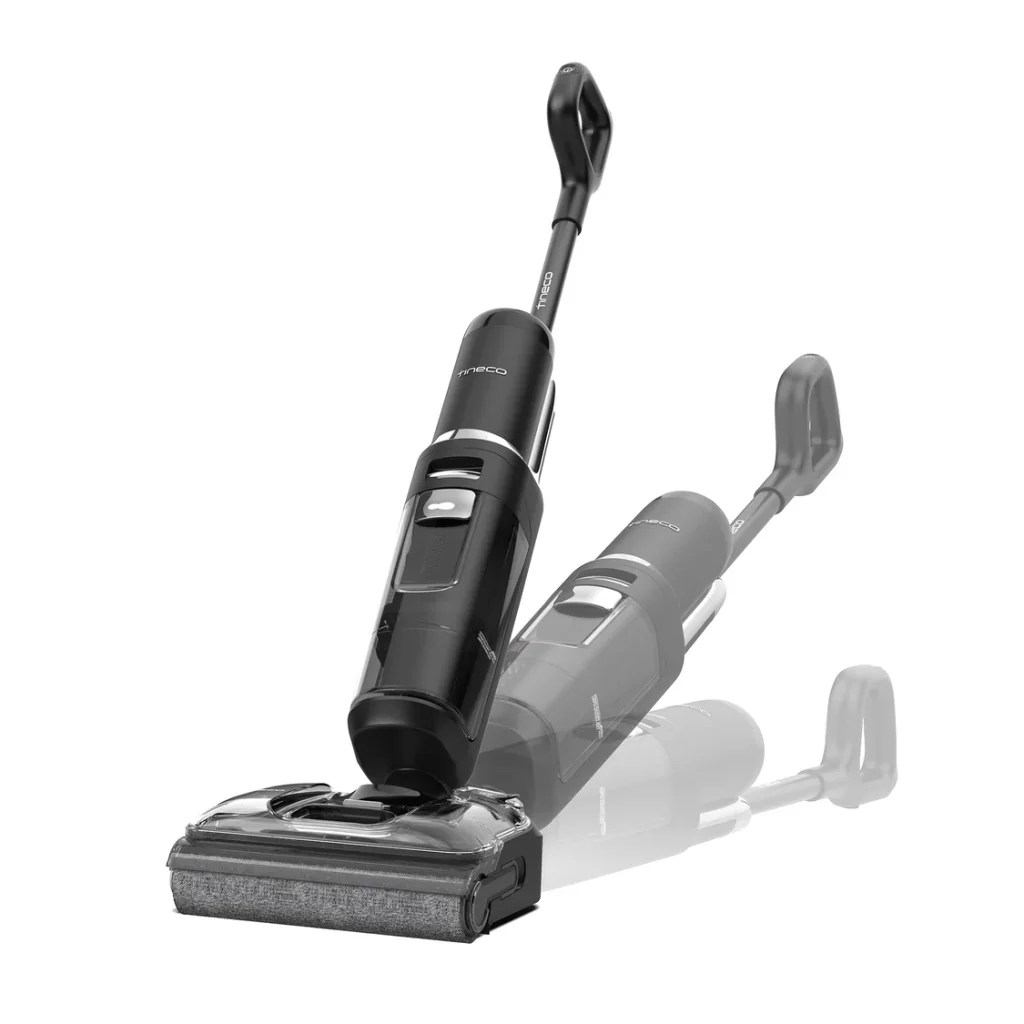
There is still a practical limit. Very large objects, cords, toys, or anything you would not intentionally feed into a normal vacuum should be picked up first.
What Floors Can You Use It On?
Tineco’s support guidance lists non-carpeted surfaces such as vinyl, tile, and sealed wood. That means FLOOR ONE should be treated as a hard-floor machine unless the exact model’s manual says otherwise.
See also: Best Tineco Vacuums in 2026
Can You Use It as a Regular Dry Vacuum?
Do not assume so. Tineco specifically warns on several FLOOR ONE models that dry-only operation without water can damage the brush roller. If you need a machine that spends much of its life vacuuming carpet or rugs, look at Tineco’s PURE ONE or A-series cordless vacuums instead.
How Does the Clean-Water/Dirty-Water System Work?
The machine carries clean water separately from the dirty liquid it recovers. During use, clean solution reaches the floor while debris and dirty water are pulled into the dirty-water tank. That separation is one of the major advantages over repeatedly dipping a mop into increasingly dirty water.
What Is Self-Cleaning?
On supported FLOOR ONE models, self-cleaning rinses the internal cleaning path and brush roll while the machine sits on its dock or storage tray. It is useful, but it is not magic. Tineco’s own instructions still tell owners to empty the dirty-water tank and keep sufficient clean water in the clean-water tank before starting the cycle.
Do You Still Need to Clean the Machine Yourself?
Yes. Tineco advises cleaning the brush roll after each use on multiple FLOOR ONE models. The dirty-water tank also needs prompt attention. Leaving warm dirty water, hair, and food debris sitting in a closed tank is an easy way to create odor.
For the full routine, see our Tineco FLOOR ONE maintenance guide.
What Cleaning Solution Should You Use?
Tineco recommends its own cleaning solution and warns that third-party formulas may create excess foam. Bleach is also not recommended. We cover that question in detail in our separate guide on cleaning solutions.
How Long Does the Battery Last?
Runtime varies significantly by model and mode. Older or smaller FLOOR ONE models may run around half an hour, while some newer models advertise substantially longer maximum runtimes. Treat the exact product page and manual as the source of truth for the model you are considering.
Who Should Buy a FLOOR ONE?
- Homes with lots of sealed hardwood, tile, vinyl, or laminate.
- Families dealing with crumbs, tracked dirt, and frequent small spills.
- Pet homes where hard-floor hair and paw messes are common.
- People who want to combine vacuuming and mopping into one pass.
Who Should Probably Buy Something Else?
- Homes dominated by wall-to-wall carpet.
- Anyone who wants one machine to dry-vacuum rugs and carpet most of the time.
- People unwilling to empty and rinse dirty-water components after cleaning.
See also: Tineco vs BISSELL CrossWave
The Bottom Line
The FLOOR ONE concept is simple once you stop thinking of it as a normal vacuum. It is a hard-floor washer that also picks up debris. If that matches your home, it can remove an entire step from routine cleaning. If your home is mostly carpet, a conventional cordless vacuum is the better starting point.
Frequently Asked Questions
Do you need to vacuum before using a Tineco FLOOR ONE?
For routine hard-floor messes, usually not. FLOOR ONE machines are designed to pick up ordinary debris while washing, although large objects, cords, and anything you would not feed into a normal vacuum should be removed first.
Can a Tineco FLOOR ONE clean carpet?
Treat a FLOOR ONE as a hard-floor machine unless the exact model manual says otherwise. Tineco’s support guidance for the family focuses on compatible non-carpeted surfaces such as sealed wood, tile, and vinyl.
Can you use a Tineco FLOOR ONE as a dry vacuum?
Do not assume so. Tineco warns on several FLOOR ONE models that dry-only operation without water can damage the brush roller. Check the instructions for the exact model you own.
Does the self-cleaning cycle replace manual cleaning?
No. Self-cleaning helps rinse the internal cleaning path and brush roll, but the dirty-water tank, brush roll, and other removable parts still need routine attention.